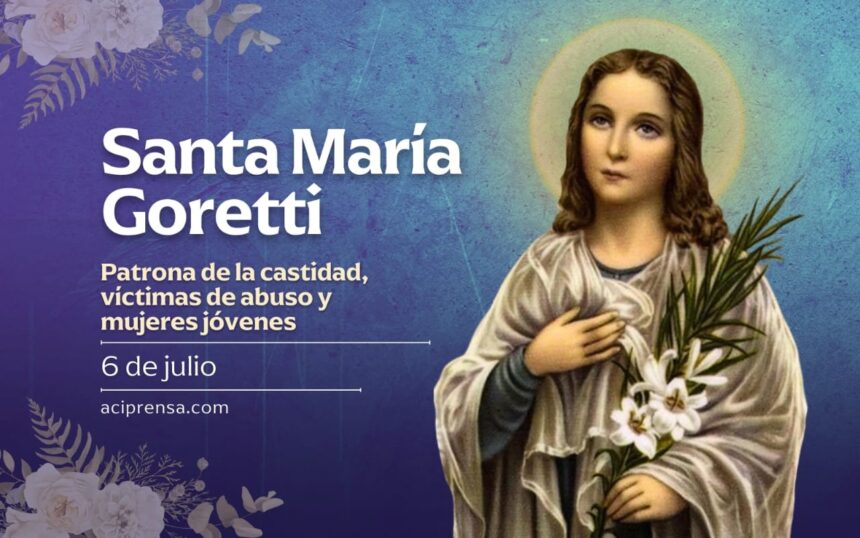

Every year on July 6, Catholics around the world commemorate the feast of Saint Maria Goretti, one of the youngest saints of the Catholic Church. While she is remembered as a martyr for purity, her greatest legacy may well be something even more difficult for the modern world to embrace: forgiveness.
Maria Goretti was only 11 years old when her life was brutally cut short in 1902 after she resisted an attempted rape by Alessandro Serenelli. Despite suffering fatal wounds, her final words were not filled with anger or calls for revenge. Instead, she forgave her attacker and expressed the hope that one day they would meet in heaven.
In an age where retaliation is often celebrated and forgiveness is mistaken for weakness, Maria’s witness remains both challenging and inspiring. She reminds us that forgiveness does not excuse wrongdoing or erase justice. Rather, it frees the victim from the prison of hatred and entrusts justice to God.
Her story also demonstrates the transforming power of mercy. Alessandro spent years in prison, initially unrepentant. Yet after a profound conversion, he sought forgiveness from Maria’s mother, Assunta, who welcomed him with the same mercy her daughter had shown before dying. He would later dedicate his life to God as a lay brother in a monastery. It is a remarkable testimony that no one is beyond redemption.
Beyond forgiveness, Maria Goretti’s life speaks powerfully to today’s young people. She lived in poverty, faithfully helped her family after her father’s death, respected her mother, and remained steadfast in her Christian values despite immense pressure. Her courage challenges young people to stand firm for what is right, even when it comes at a personal cost.

Rev. Fr. Austen Christmas, Parish Priest of Rushoroza Cathedral, reminds Christians that Maria’s greatest victory was not over her attacker but over hatred itself.

Her example encourages believers to build their lives on faith, love, mercy, and obedience to God.
He also emphasizes the importance of choosing good friends, respecting parents and elders, and avoiding influences that lead people away from God.
Her feast also offers an opportunity to reflect on the role of patron saints in Catholic life. Patron saints are not worshipped or seen as substitutes for Jesus Christ. Rather, they are faithful disciples whose lives continue to inspire believers. Catholics ask for their prayers just as Christians ask one another to pray for them, trusting in the communion of saints described in Scripture.
More than a century after her death, St. Maria Goretti’s message remains strikingly relevant. In societies scarred by violence, abuse, broken relationships, and endless cycles of revenge, her life offers a different path—the path of courage, purity, compassion, and forgiveness.
Forgiveness is never easy. It does not deny pain or diminish suffering. But as St. Maria Goretti’s life demonstrates, forgiveness has the power to heal hearts, transform lives, and point humanity toward the hope found in Christ.
On this feast day, her life invites each of us to ask a difficult but necessary question: if an eleven-year-old girl could forgive the man who took her life, what grudges are we still holding onto that keep us from experiencing true peace?