




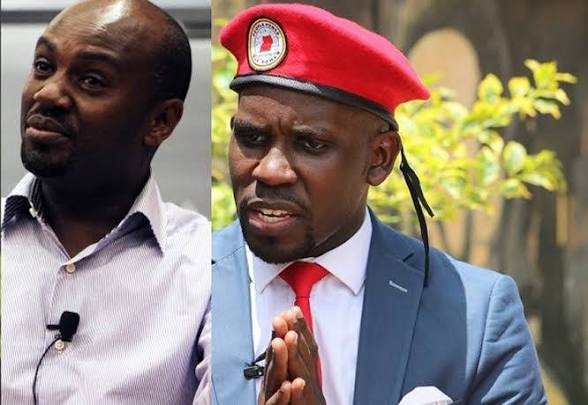

Political commentator Andrew Mwenda has openly declared a political battle against Leader of the Opposition (LOP) Joel Ssenyonyi, threatening to mobilise parliamentary support to amend the rules governing the opposition leadership and remove him from the influential position.
Mwenda, who is associated with the Patriotic League of Uganda (PLU), said the group intends to use its political influence to push constitutional and parliamentary changes that would strip Ssenyonyi of his position, leaving him as an ordinary Member of Parliament representing Nakawa West.

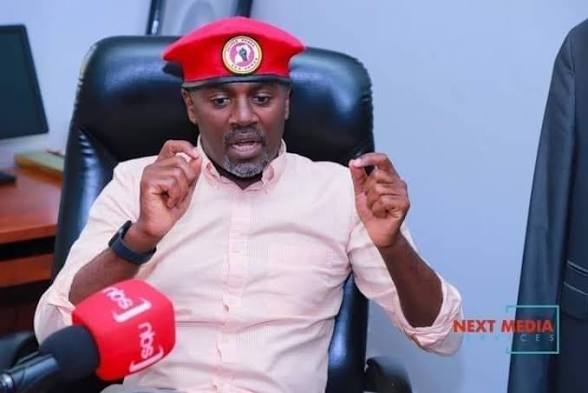
“We will remove Joel Ssenyonyi as the Leader of the Opposition. We will go to Parliament and secure 90% of the vote to amend the Constitution, change the rules governing the Leader of the Opposition and remove him. We are going to remove him democratically,” Mwenda declared.
His remarks signal an escalating political confrontation over the leadership of Uganda’s parliamentary opposition, with Ssenyonyi emerging as a potential target of a campaign aimed at weakening his influence within Parliament.
Mwenda’s proposed strategy appears to go beyond challenging Ssenyonyi politically. By suggesting amendments to the legal and procedural framework governing the Leader of the Opposition, he is advocating changes that could fundamentally alter how the position is occupied and who qualifies to hold it.

The threat to secure 90 per cent parliamentary support also raises questions about the numbers, political alliances and legislative manoeuvres PLU believes it can mobilise to achieve its objective.

Under the current parliamentary arrangement, the Leader of the Opposition is a key figure responsible for coordinating opposition activities, scrutinising government policies and holding the Executive accountable.
Ssenyonyi’s removal would therefore represent more than a change in parliamentary title. It could reshape the opposition’s leadership structure and potentially weaken the political platform through which opposition legislators challenge government decisions.

However, Mwenda’s declaration leaves several critical questions unanswered, including the specific constitutional provisions or parliamentary rules targeted for amendment, the proposed replacement framework and whether PLU has the parliamentary numbers required to push through such changes.
It is also unclear how opposition parties and other parliamentary stakeholders would respond to an initiative that could directly affect the independence and organisation of opposition leadership.
For now, Mwenda’s declaration has placed Ssenyonyi’s position at the centre of a fresh political storm, setting the stage for a potentially bitter contest over who controls the opposition’s leadership in Uganda’s Parliament.
Whether the threat translates into an actual legislative campaign or remains political rhetoric will depend on the support Mwenda and his allies can secure inside Parliament.