









A private member’s bill that would fundamentally alter how Uganda’s Leader of the Opposition is elected, held accountable and removed has been formally gazetted, advancing a contentious proposal to shift power from the largest opposition party to all opposition members of parliament.
The Administration of Parliament (Amendment) Bill, 2026, appears as Bill No. 15 in the Uganda Gazette, Volume CXIX, No. 95, dated 23 October 2026.Sponsored by Buyaga West County MP Dennis Namara (Kagadi District), the legislation seeks to amend the Administration of Parliament Act, 1997, which currently governs the selection and tenure of the Leader of the Opposition (LoP).

Under existing law, Section 8 of the 1997 Act provides that the LoP is elected by the opposition party holding the greatest numerical strength in Parliament.While that party may consult other opposition groups and independent MPs, the statute does not require their participation in the vote.
Section 9 sets out limited grounds for the officeholder’s removal, including action by the electing party, resignation, departure from that party, loss of parliamentary seat under Article 83 of the Constitution, or the party’s loss of status as the largest opposition force.
Namara’s bill proposes replacing that arrangement with an election conducted by all opposition MPs. It would also require the LoP to consult opposition parties, organisations and independent legislators when appointing representatives to parliamentary leadership positions.

The Shadow Cabinet, opposition MPs assigned portfolios mirroring those of government ministers, would need approval through a parliamentary resolution of opposition members rather than appointment solely by the LoP in consultation with party leadership.

Additional grounds for removal would include misconduct, incompetence and inability to perform duties due to infirmity of body or mind. The bill further provides that the current officeholder would vacate the post three months after the law comes into force, triggering a fresh election under the new rules.
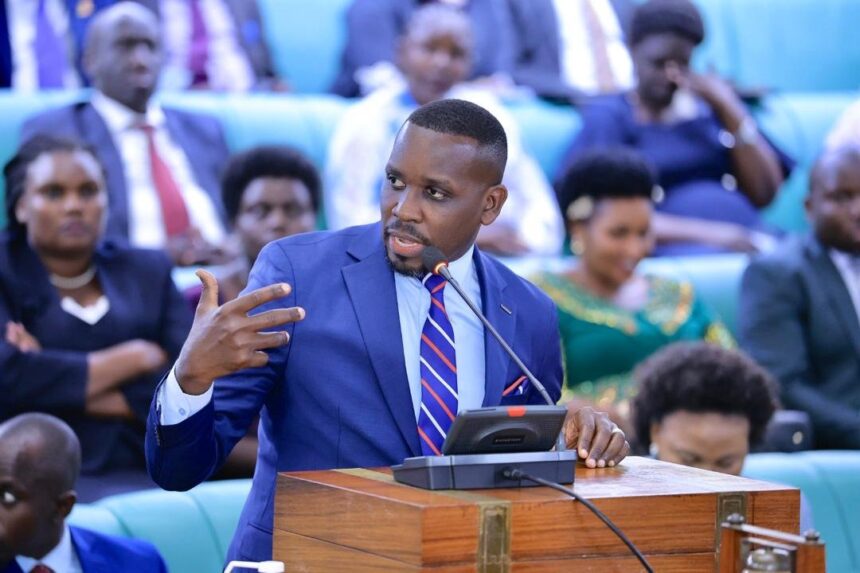
“The existing arrangement concentrates the selection of the Leader of the Opposition in the hands of one political party, despite the officeholder representing the wider opposition in Parliament,” Namara told parliament when he successfully sought leave to introduce the bill on 8 July 2026, during a plenary session chaired by Deputy Speaker Thomas Tayebwa.
He argued that the current system “denies other opposition MPs an effective opportunity to participate in choosing the person who leads them and holds the Government accountable.”
The constitutional foundation for the changes lies in Article 82A of the 1995 Constitution, which requires Parliament to legislate on the manner of choosing the LoP, the circumstances under which the office is vacated, the officeholder’s status and functions, and the attached benefits and privileges.
The LoP is tasked with scrutinising government policies, coordinating opposition positions and proposing alternatives; the office carries the status and privileges of a Cabinet minister.The initiative emerges against a backdrop of public friction between current Leader of the Opposition Joel Ssenyonyi and Gen. Muhoozi Kainerugaba, Chief of Defence Forces and head of the Patriotic League of Uganda (PLU).
In posts on X, Muhoozi called for Ssenyonyi’s removal and directed PLU-affiliated legislators to explore avenues for unseating him.
PLU later endorsed the proposed amendments.Kasambya County MP David Kabanda, who heads the Office of the PLU Chairman, announced the organisation’s support on behalf of Muhoozi, stating that the law should provide a clear mechanism for removing the Leader of the Opposition.
Gazetting constitutes a formal procedural step in Uganda’s legislative process. It does not enact the bill. The measure must still pass through the full parliamentary stages, including committee scrutiny, debates and votes, before it can be presented to the President for assent.
Namara told this reporter he is prepared to present the bill on the floor of Parliament.If enacted, the changes would mark the most significant revision to the institutional architecture of parliamentary opposition since the Administration of Parliament Act came into force nearly three decades ago, potentially reshaping intra-opposition dynamics and the accountability relationship between the LoP and the broader opposition caucus.