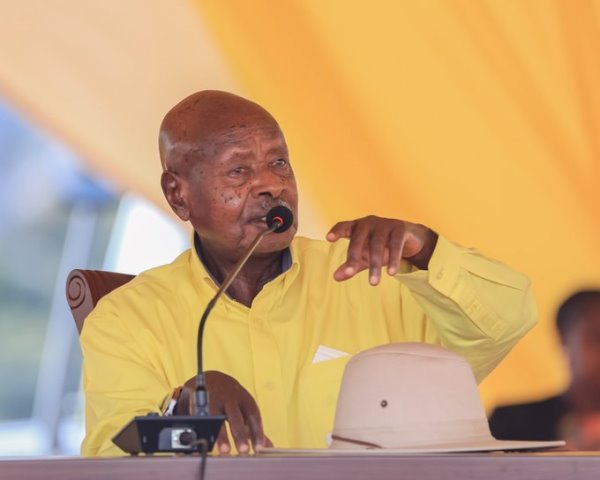

President Yoweri Kaguta Museveni has once again cautioned Ugandans against sectarian politics, drawing on historical experiences that he says plunged the country into decades of instability, bloodshed, and economic collapse.
In a detailed reflection following his earlier August 30th, 2025, message on party membership and ideology, President Museveni revisited Uganda’s post-independence political trajectory, warning that opportunistic alliances rooted in religion, tribe, or region had fractured the nation and failed to build lasting unity.
He recalled that at independence in 1962, politics was divided along sectarian lines: the Democratic Party (DP) for Catholics, the Uganda People’s Congress (UPC) for Protestants and some Muslims, and Kabaka Yekka (KY) for Buganda Protestants. None of these groups commanded a majority, forcing UPC into what he called an “unprincipled alliance” with KY, which collapsed within two years, sparking the 1966 Obote-Muteesa conflict and later paving the way for Idi Amin’s 1971 coup.
“By 1979 when we defeated Idi Amin, 500,000 Ugandans had been killed extrajudicially and the economy had collapsed so much that people had no soap, no salt, no clothes, no paraffin,” Museveni said, stressing that leaders’ mistakes had forced ordinary Ugandans to pay the highest price.
He recounted the aftermath of the rigged 1980 elections, when frustrated citizens urged him to take action. This led to the NRA’s armed struggle beginning with the February 6, 1981, attack on Kabamba.

According to Museveni, about 80% of Ugandans backed the decision to fight, cutting across party divides.

“After Kabamba, it would have been irresponsible for anybody to talk of DP, UPC, Kabaka Yekka, UPM, or Nabudere group. We were all NRM with equal rights, risks, and responsibilities,” he said.
Museveni emphasized that the strength of the NRM and later the UPDF came from its inclusiveness. Former fighters from rival political and armed groups, including ex-UNLA, UFM, FUNA, and others, were integrated into the NRA. This approach, he argued, eliminated the sectarian-driven infighting that had characterized the military between 1962 and 1986.
“Many of the senior officers and ordinary soldiers are now retiring honourably. No single soldier has died on account of intra-UPDF conflicts based on sectarianism, unlike what used to happen before,” he noted.
The President attributed the NRM’s long survival to its four ideological pillars: patriotism, Pan-Africanism, socio-economic transformation, and democracy.
He urged Ugandans to remain vigilant against divisive politics, citing recent sectarian undertones at the NRM’s Kololo conference over the Buganda CEC Vice-Chairpersonship.
“Buganda is a multi-cultural unit. Even if the population is mainly Baganda, you should look for capacity and dedication, not ethnicity,” Museveni said, adding that next time he will focus on organizational issues within the party.