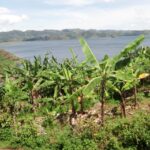
The Acholi sub-region is positioning itself as a major coffee-producing hub in Uganda, with an ambitious target to expand coffee gardens to one million hectares over the next three years.
This bold initiative is spearheaded by the Operation Wealth Creation (OWC) program, aimed at boosting coffee production and transforming the livelihoods of farmers across the region.
Sylvia Damalie Owori, Director of Operation Wealth Creation, stated that the program is working closely with key government institutions, including the Ministry of Agriculture, Animal Industry and Fisheries (MAAIF), the National Coffee Research Institute (NaCORI), the Ministry of Water and Environment, and the Ker Kwaro Acholi cultural institution.
“To achieve this milestone, OWC has rolled out several strategic interventions,” Owori explained. “These include mobilizing and training willing coffee farmers, distributing high-quality coffee seedlings, and supporting water access by drilling boreholes for coffee nursery operators.”
Specifically, NaCORI will identify 3,000 coffee nursery bed operators across the sub-region who will benefit from boreholes to ensure a steady water supply, thereby mitigating the adverse effects of climate change on coffee production.

Owori emphasized that coffee farming holds immense potential for driving economic transformation in the region.

“Coffee is a highly profitable crop that can significantly uplift farmers’ incomes and contribute to the economic growth of the Acholi sub-region,” she noted.
Retired Brig. Gen. John Charles Anywar, OWC’s Director for Coffee, Tea, and Cocoa, highlighted coffee cultivation as a tool for land protection and conflict prevention.
“When coffee is planted on a piece of land, it serves as a visible, productive investment making it less likely to be contested or sold,” he said.
Meanwhile, Lamwo Resident District Commissioner, Williams Komakech, called on agricultural extension workers to lead by example by establishing their own coffee gardens.
“It is not right for an extension worker to advise farmers on coffee farming without practicing it themselves,” Komakech asserted. “Demonstration gardens by extension workers can serve as powerful learning sites for farmers.”
Komakech affirmed that while the one million hectare target is ambitious, it is attainable with the right support, resources, and commitment.
“Coffee farming has the potential to become a cornerstone of economic development in the region, enhancing the livelihoods of farmers and their families,” he concluded.
Lamwo District Chairperson, Sisto Oyet Ocen, also praised the collaborative efforts between OWC and various stakeholders. He stressed the importance of dispelling the long-standing misconception that Acholi land is unsuitable for coffee farming.
“This myth must be erased. Our land has great potential, and with proper support, we can turn coffee into one of our region’s most valuable assets,” he affirmed.