
Summary:
- While Minister Magyezi justified the extension as necessary due to financial constraints, opposition MPs strongly criticized the government’s handling of local elections, portraying it as detrimental to democratic principles and national priorities.
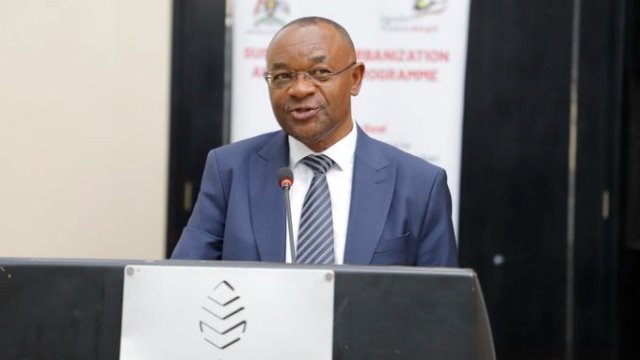
KAMPALA: The Minister of Local Government, Raphael Magyezi on Wednesday defended his recent decision to extend the term of office for Local Council One (LC1) leaders by another 180 days.
He emphasized that this move was necessary due to the Ministry of Finance’s failure to allocate Shs50 billion to the Electoral Commission for organizing elections.
Speaking at Parliament during a media interview, Minister Magyezi highlighted that the current leaders’ term was set to expire, posing a potential leadership crisis if left unaddressed.

“The required funds amount to a mere Shs50 billion, a relatively small sum given the recent start of the fiscal year. Unfortunately, despite our patience, the Ministry of Finance informed us of their inability to allocate these funds to the Electoral Commission for organizing the elections,” explained Magyezi. “To prevent a leadership vacuum and subsequent chaos, I had to extend the LC1 leaders’ term. Even a short period without operational leaders at the grassroots level could have severe consequences.”

Magyezi cited Regulation 11 of the Local Government Act, which permits such extensions but imposes a strict 180-day limit.
The second extension, he clarified aims to ensure continuity in local governance until elections can be organized. He underscored the importance of maintaining operational continuity for LC1s, as they are pivotal in delivering essential services and maintaining order at the community level.
However, some Members of Parliament voiced strong opposition to the government’s repeated delays in conducting LC elections. Charles Tebandeke of Bbaale County condemned Magyezi’s decision as regressive and accused the government of authoritarian tactics. Silas Aogon from Kumi Municipality criticized the prioritization of resources, arguing that LC1 leaders play a critical role as the initial point of contact for government services.
“This extension reflects a backward and authoritarian approach to governance,” remarked Tebandeke. “It undermines human rights and the democratic mandate of the people. It seems like a deliberate attempt to manipulate local structures for political gain, potentially delaying elections until after the 2026 general elections.”
Aogon echoed these sentiments, emphasizing the fundamental role of LC1 leaders in local governance and criticizing the government’s failure to prioritize essential services. He called upon Parliament to allocate resources appropriately and questioned why the process of electing LC1 leaders, which involves straightforward methods like lining up, has been repeatedly delayed.