
Summary:
Last year, President Yoweri Museveni issued an Executive Order banning charcoal burning in northern Uganda. However, legislators from the region recently reported that charcoal dealers have resorted to using covered vehicles to evade detection, rather than the previously used open trucks.
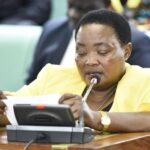
KAMPALA: The State Minister for Environment, Beatrice Anywar, has announced that the government is considering a pilot program for electric vehicles as part of its efforts to combat climate change.
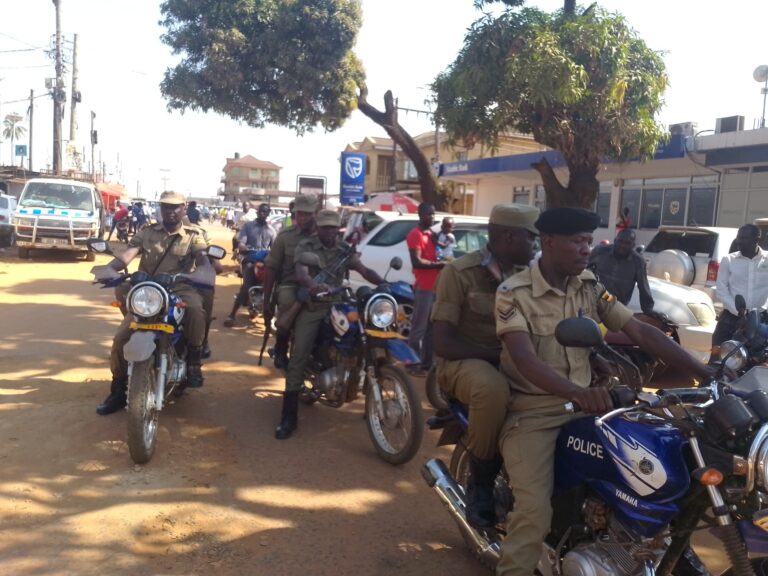
Addressing Parliament, Anywar pointed to the ongoing heatwave as a stark reminder of climate change’s impact. She revealed that the government plans to begin the transition by equipping the Uganda Police Force with electric cars and motorcycles for routine patrols.

“As part of efforts to improve our transport system, the government is taking deliberate steps. During last Monday’s Cabinet meeting, we resolved to start with the Ministry of Internal Affairs. Our police officers, who travel frequently, will be the first to receive electric motorcycles and vehicles,” Anywar stated.

Her remarks came in response to Laurence Biyika Songa, Chairperson of Parliament’s Committee on Climate Change, who challenged the government to address the heatwave by reducing emissions, particularly from motor vehicles in congested areas like Kampala.
Songa, the MP for Ora County, argued that Uganda’s current transport system significantly contributes to rising temperatures. “Traffic jams generate excessive heat and increase emissions. We burn too much fuel and lose substantial amounts of money on vehicle maintenance due to our inefficient transport system,” he noted.
Anywar explained that the heatwave is expected to subside by mid-March when cooler temperatures and rains return. She attributed the extreme conditions to seasonal dry weather, the sun’s position near the equator, a tropical cyclone in the Indian Ocean, and the urban heat island effect.
However, several legislators criticized the minister for failing to outline clear mitigation measures for affected Ugandans.
“We need adaptation strategies because some causes of these heatwaves are natural while others are man-made. While we cannot control natural factors like high-pressure systems, we must adapt to survive. This heatwave is affecting health, agriculture, and the economy. Increased evaporation from Lake Victoria will likely lead to heavy rainfall and flooding. We must focus on disaster preparedness rather than reactive relief efforts,” Songa warned.
Shadow Minister for Environment Christine Kaaya Nakimwero (Woman MP, Kiboga) urged the government to educate farmers on the heatwave’s impact on agriculture, warning that crop failures are inevitable. She also called for stronger advocacy for climate action at international forums.
“We are facing these challenges not just because of local activities but also due to global environmental mismanagement. What steps can we take to measure our contributions to adaptation and mitigation?” she questioned.
Kalungu West MP Joseph Ssewungu, representing the Leader of the Opposition in Parliament, called for stronger government action to curb deforestation and promote alternative energy sources.
“We must prioritize alternative energy over deforestation. Ugandans can use gas, but its high cost remains a barrier. The government should reduce taxes on alternative energy sources to encourage adoption,” Ssewungu suggested.
In response, Anywar assured MPs that gas prices would drop once Uganda begins producing its own oil and gas in the Albertine region. She noted that the government has already subsidized 40% of gas cylinder costs.
“As a country, we will soon start producing oil and gas. Meanwhile, the government has already subsidized 40% of the cost of gas cylinders and small cookers. This reduction is already in place, allowing Ugandans to access gas at a lower price,” she said.
Last year, President Yoweri Museveni issued an Executive Order banning charcoal burning in northern Uganda. However, legislators from the region recently reported that charcoal dealers have resorted to using covered vehicles to evade detection, rather than the previously used open trucks.