
Summary:
Robert Mugabe, the Kabale Deputy Chief Administrative Officer, confirmed that the Kigezi region was chosen to host the national event. Districts within the region were invited to express their interest, and Kabale was selected as the host.
KABALE: Kabale District Local Government has been selected to host this year’s national World Environment Day celebrations on June 5th. Organized annually by the United Nations, World Environment Day aims to raise global awareness and encourage action for environmental protection.
The 2025 national theme, “United Against Plastic Pollution,” highlights the urgent need to tackle the escalating problem of plastic waste. This theme calls on policymakers, manufacturers, and local communities to unite in taking decisive action against plastic pollution.

Robert Mugabe, the Kabale Deputy Chief Administrative Officer, confirmed that the Kigezi region was chosen to host the national event. Districts within the region were invited to express their interest, and Kabale was selected as the host.

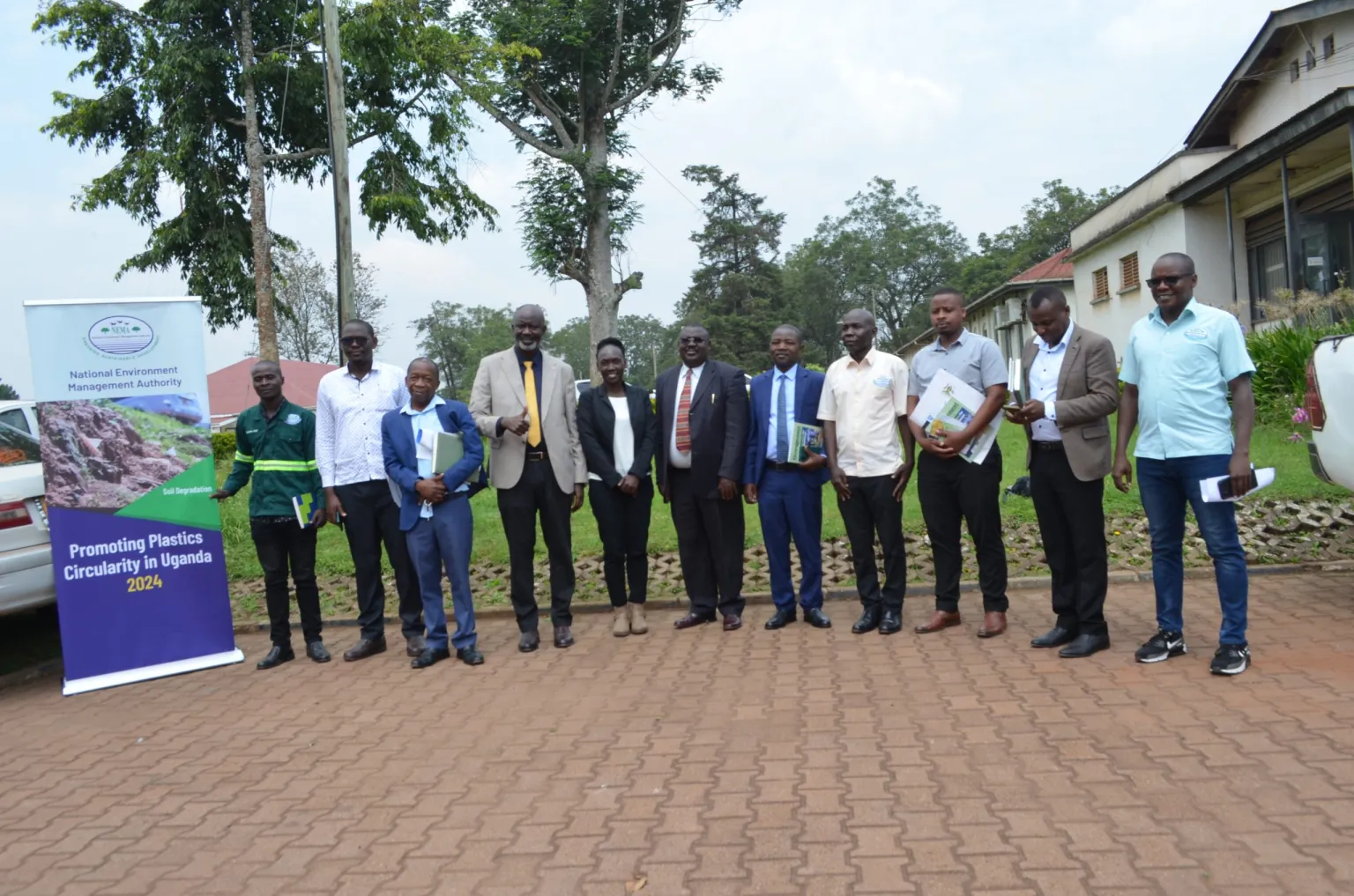
During an inception meeting on Friday, chaired by Kabale District LCV Chairperson Nelson Nshangabasheija, Wilbert Ikalai, Manager of Environment Education and Advocacy at the National Environment Management Authority (NEMA), emphasized the significance of the event.
Ikalai highlighted that World Environment Day not only raises awareness about the dangers of plastic pollution but also inspires stakeholders to take action and fosters collaboration in addressing environmental challenges.
Nshangabasheija welcomed the opportunity for Kabale to host the celebrations, noting its timely relevance. He stressed that the event would help disseminate critical information about the Presidential directive on wetland restoration, a key environmental priority.
Henry Tumwesigye, the Kabale District Natural Resources Officer, echoed these sentiments, emphasizing the complex challenge of balancing wetland conservation with the livelihoods of many residents who depend on these ecosystems.
He expressed optimism that the event would educate the public on sustainable land use and the importance of environmental conservation.
Kabale’s Resident District Commissioner, Godfrey Nyakahuma, voiced concerns over the weak enforcement of the National Environment Management Act of 2019. The act includes a ban on the manufacture, importation, sale, and use of certain plastic carrier bags. Nyakahuma called for stricter enforcement to curb plastic pollution effectively.
Research by NEMA reveals that 8.3 billion tons of plastic have been produced globally to date, generating 6.3 billion tons of waste.
Alarmingly, only 9% of this waste is recycled, while 12% is incinerated and 79% accumulates in landfills. If current trends persist, over 12 billion tons of plastic waste will remain in the environment or landfills by 2050.
In Uganda, approximately 600 metric tons of plastic waste are generated daily, with Kampala alone accounting for 180 metric tons. However, the Kampala Capital City Authority collects only about 30% of this waste, exacerbating environmental pollution. Similar challenges are faced by other urban and semi-urban areas nationwide.
Tony Achidria, Senior Environment Awareness Officer at NEMA, underscored the adverse impacts of plastic pollution on human health, the environment, and Uganda’s blue economy, particularly in agriculture and fisheries.
He also highlighted the country’s unsustainable plastic disposal methods, including open burning, indiscriminate dumping, and burial. Open burning significantly contributes to air pollution, which causes over 1.2 million deaths annually in Africa.
Globally, plastic production continues to surge, with over 430 million tons of plastic produced each year. Two-thirds of this production consists of short-lived products that rapidly turn into waste, polluting oceans and entering the human food chain.
Established at the 1972 United Nations Conference in Stockholm, World Environment Day serves as the UN’s primary platform for promoting environmental awareness and action. It is observed annually on June 5th in over 150 countries, offering member states an opportunity to reflect on their environmental protection efforts and reaffirm their commitment to sustainable resource management.
This year, the Republic of Korea will host the international World Environment Day celebrations in Jeju Special Self-Governing Province, a leader in Korea’s fight against plastic pollution. Jeju has introduced the country’s first disposable cup deposit system and aims to be free of plastic pollution by 2040.
World Environment Day 2025 will serve as a crucial platform for raising awareness and mobilizing global efforts to combat the escalating threat of plastic pollution.