







Summary:
MP Muwanga further highlighted the project’s financial management struggles, revealing that while the Ministry of Finance allocated Shs75.1 billion for GROW project expenses, only Shs18 billion had been spent.
KAMPALA: Legislators have raised concerns over the low disbursement and absorption levels of the GROW project following an Auditor General’s report.
The report revealed that out of the US$22 million (Shs80.669 billion) earmarked for disbursement in 2024, only US$18.14 million (Shs66.506 billion) had been disbursed to women entrepreneurs, despite their ongoing struggles to access affordable capital for their businesses.

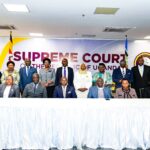
These concerns were voiced during a meeting between the Public Accounts Committee and officials from the Ministry of Finance, as they scrutinized the US$217 million (Shs795.627 billion) World Bank-funded project.

“The audit indicates that by June 2024, cumulative disbursement should have reached US$22 million (Shs80.669 billion), but by the time of the audit, only US$18.14 million (Shs66.506 billion) had been disbursed, leaving US$3.2 million (Shs11.733 billion) unabsorbed. The Auditor General flagged this as a low absorption issue. Can you explain?” asked Muwanga Kivumbi, Chairperson of the Public Accounts Committee.
In response, Ruth Aisha Kasolo, Project Coordinator of the Generating Growth Opportunities and Productivity for Women Enterprises (GROW) Project, acknowledged the concern but attributed the under-disbursement to the project’s early stages of implementation.
“We recognize the auditors’ concern, but the under-disbursement resulted from the project being in its initial implementation stages, with activities commencing this financial year. We have been working on the structural designs, particularly for the loan disbursement process. However, in the current financial year, we have made progress in actualizing these disbursements,” Kasolo explained.
However, her response was met with skepticism from Susan Amero (Amuria DWR), who accused the project of discriminatory fund allocation, alleging that the funds were being directed to districts with government connections.
“I am surprised by Dr. Ruth’s explanation that training was ongoing. From the beginning, how many districts have actually received this money? It seems like the funds are being retained at the center and only allocated to those with connections. In Northern Uganda, for instance, large sums are concentrated in Lira City. We need to ensure that this money reaches its intended beneficiaries,” Amero stated.
Muwanga further highlighted the project’s financial management struggles, revealing that while the Ministry of Finance allocated Shs75.1 billion for GROW project expenses, only Shs18 billion had been spent. He argued that this reflected difficulties in both disbursement and utilization of funds by women entrepreneurs.
“You had a budget of Shs75.1 billion in 2023/24 but only spent Shs18 billion, leaving an unspent balance of Shs56.6 billion an absorption rate of just 23%. The project is failing to disburse funds effectively, and even when funds are disbursed, the absorption rate remains critically low. This raises concerns about the project’s ability to utilize the World Bank loan efficiently,” Muwanga stated.