








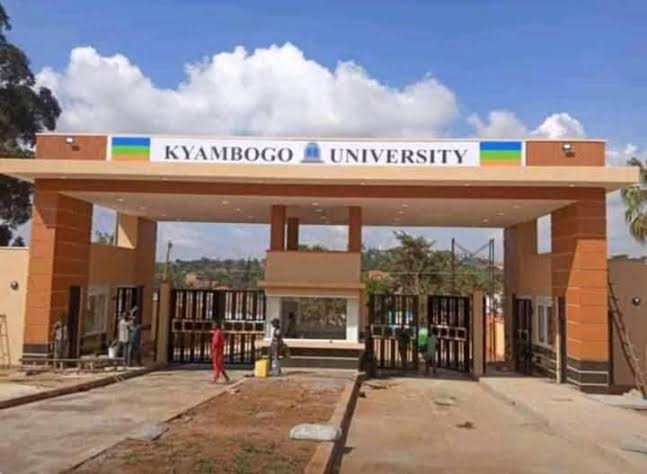

Kyambogo University has suffered a legal setback after the court awarded Magdalene Atono Shs19 million in compensation following findings that the institution unfairly kept her on short-term employment contracts for years while colleagues in similar circumstances were placed on permanent terms.
The ruling has raised serious questions about the university’s employment practices, fairness and the treatment of workers, particularly after Atono reportedly acquired additional qualifications but continued to face barriers to permanent employment.


Atono was hired to work in the university’s main kitchen, where she served under successive short-term contracts even as other employees were considered for permanent employment.
In what appears to be a particularly troubling aspect of the dispute, Atono went ahead and obtained a Certificate in Hotel and Institutional Catering from Kyambogo University itself.
However, her academic achievement did not translate into improved employment conditions.Instead of confirming her into permanent employment, university management reportedly maintained that she did not qualify because she lacked a credit in English at Ordinary Level.

The decision became the centre of a legal battle in which questions were raised about why Atono was continuously excluded from permanent employment while other workers received better contractual arrangements.

Delivering the judgment, Justice Linda Lillian Tumusiime-Mugisha questioned Kyambogo University’s handling of Atono’s employment and its failure to provide convincing evidence explaining why she was treated differently.
The judge noted that the university had not adduced evidence to justify Atono’s exclusion from consideration for confirmation.She also questioned why the institution placed Atono in an employment category that did not exist and subsequently failed to consider her for permanent appointment.

The court’s findings cast a spotlight on the university’s human resource practices, particularly the use of repeated short-term contracts and the apparent absence of a convincing explanation for treating employees differently.
Atono was represented by Professor John Jean Barya, a former lecturer at Makerere University’s School of Law, who took up her case against the institution.The Shs19 million award represents a significant legal victory for Atono after years of working under uncertain employment conditions.
Beyond the financial compensation, the judgment raises broader questions about fairness, equal treatment and accountability in public institutions.
For Kyambogo University, the ruling is an uncomfortable reminder that institutions entrusted with educating and promoting fairness must also be prepared to defend their own employment decisions before the law.
Atono’s victory could also encourage other workers who believe they have been unfairly denied permanent employment to challenge practices they consider discriminatory.