
The Ministry of Health has rolled out comprehensive Standard Operating Procedures (SOPs) aimed at strengthening Ebola Virus Disease (EVD) prevention and control in schools and other education institutions during the current outbreak.
The new guidelines are intended to safeguard learners, teachers, non-teaching staff, parents, and visitors by ensuring schools remain safe learning environments while minimizing the risk of Ebola transmission.
According to the Ministry, schools are highly interactive environments where infectious diseases can spread quickly if preventive measures are not strictly observed.
The SOPs apply to all categories of institutions, including nursery and Early Childhood Development (ECD) centres, primary and secondary schools, boarding and day schools, universities, vocational institutions, and special needs schools.
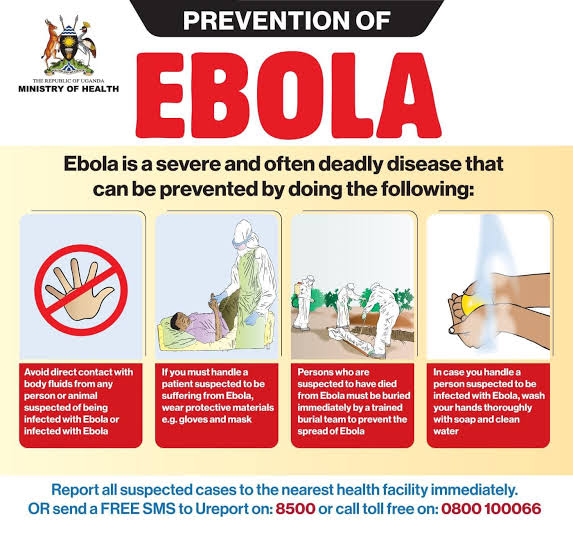
Under the new directives, schools are required to establish handwashing facilities with clean water and soap at strategic points including entrances, classrooms, dormitories, toilets, dining areas, and staff rooms. Mandatory handwashing for learners, staff, and visitors has also been emphasized.

The Ministry has further directed schools to establish temperature screening points at entry areas and restrict access to anyone showing symptoms associated with Ebola.

Institutions are also expected to regularly clean and disinfect classrooms, dormitories, dining halls, toilets, school vehicles, and frequently touched surfaces.
To curb possible transmission, schools have been advised to discourage handshakes, hugging, and sharing of personal items while ensuring proper ventilation in classrooms and dormitories.
School administrators have been tasked with setting up designated isolation areas for suspected Ebola cases and maintaining supplies such as soap, sanitizers, thermometers, disinfectants, and protective materials.
They are also expected to keep updated contacts for nearby health facilities and district surveillance teams to enable rapid response.
Teachers and non-teaching staff have been urged to closely monitor learners for signs of illness, reinforce hygiene practices, and immediately report suspected cases to school authorities.
Learners, on the other hand, are encouraged to regularly wash hands, avoid unnecessary physical contact, and promptly report any illness.
Parents and guardians have been advised to keep sick children at home, seek immediate medical care for Ebola-like symptoms, and cooperate with schools and health authorities during investigations and contact tracing.
The Ministry outlined a clear response plan for suspected Ebola cases in schools, including immediate isolation of affected individuals, prompt notification of health authorities, movement restrictions, and disinfection of affected areas to prevent further spread.
Additional measures have been introduced for boarding schools, hostels, cafeterias, and school transport services, including routine health monitoring, improved hygiene standards, and prevention of overcrowding.
Health officials say the SOPs are designed to strengthen preparedness in education institutions and ensure uninterrupted learning while protecting students and staff from the threat of Ebola.