
Uganda’s local languages are facing growing pressure from intermarriage, the dominance of foreign languages, and the declining use of mother tongues in homes, raising concerns among scholars about the future of cultural identity.
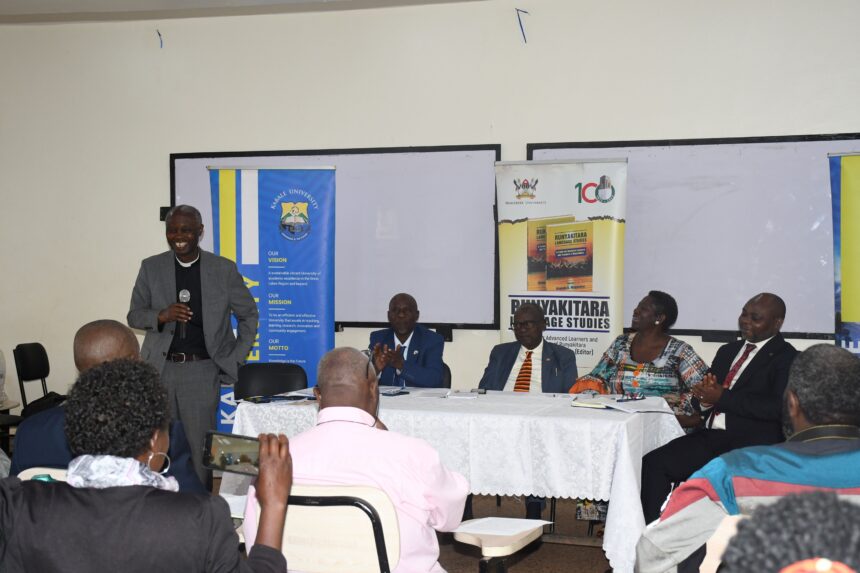
Rev Prof. Manuel Muranga John Kamugisha, Head of Runyakitara at Kabale University warns that Western Uganda’s languages, collectively known as Runyakitara, risk being sidelined despite their strong cultural and educational significance.
Runyakitara, a cluster that includes Runyoro-Rutooro and Runyankore-Rukiga, was formalized in 1990 at Makerere University to unify closely related languages under one standardized framework.
Prof. Muranga, says many parents are increasingly adopting English and other foreign languages at home, leaving children disconnected from their linguistic heritage.
He notes that intermarriage has further complicated the situation, often forcing families to prioritize one language over another.

Prof. Muranga also raised concern over the erosion of indigenous naming traditions, emphasizing that local names carry deep cultural meaning and should be preserved alongside religious names. He urged cultural and local leaders to take a more active role in promoting native languages.

//Cue in: “Let local and cultural leaders…”
Cue out: “…but first and foremost learn local language…”//
The challenge, he added, extends into the education system, where most subjects, including science and humanities, are taught in English. This, he argues, puts Ugandan learners at a disadvantage compared to students in countries where native languages are prioritized in education.
To address this, Prof. Muranga advocates for a trilingual approach in Uganda’s education system, where learners master their mother tongue, English, and Swahili. He says Runyakitara’s high level of mutual intelligibility allows communities such as the Bakiga, Banyankore, Banyoro and Batooro to share written materials and communicate effectively.
//Cue in: “I have always advocated for a trilingual policy…”
Cue out: “…master one indigenous language…”//
Students at Kabale University, including Ashaba Kenedy John and Elijah Ainembabazi, say the importance of local languages is often underestimated. They argue that teaching children their mother tongues from home through to school is essential for preserving Uganda’s cultural identity.
//Cue in: “Most people undermine languages…”
Cue out: “…there is need to teach children mother languages…”//