
Political pluralism in Uganda exists in law, but its practice tells a more complicated story. On paper, the country embraces multiparty democracy; in reality, the balance of power, institutional weaknesses and historical legacies continue to shape a system where competition is present, but not entirely equal.
Uganda’s journey with pluralism has never been straightforward. In the years leading up to and following independence, parties like the Uganda People’s Congress (UPC), Democratic Party (DP) and Kabaka Yekka (KY) dominated the political scene.
Yet this early form of multiparty politics was deeply entangled with ethnic and religious loyalties, a factor that fueled divisions rather than strengthening democratic competition. The instability that followed, particularly under Milton Obote and Idi Amin, effectively dismantled political pluralism, as opposition voices were silenced.
When Yoweri Museveni came to power in 1986, he introduced the “Movement system,” positioning it as a unifying, no-party alternative after years of conflict. While this system did bring relative stability, it also restricted political competition for nearly two decades.
The 2005 referendum, which restored multiparty politics, was widely seen as a democratic reopening, but it did not automatically level the playing field.

Today, Uganda’s legal framework supports pluralism. The Constitution guarantees freedoms of association and political participation, and political parties are formally allowed to organize and compete. However, the gap between legal provisions and political realities remains striking.

The dominance of the National Resistance Movement (NRM) continues to define Uganda’s political landscape. Opposition parties such as the Forum for Democratic Change (FDC), National Unity Platform (NUP), DP, and UPC operate within a system where structural disadvantages are hard to ignore.
Leaders like Kizza Besigye and Bobi Wine have become symbols of resistance, but their prominence also underscores a deeper issue: politics in Uganda is often personality-driven rather than ideology-based.
Institutions meant to safeguard pluralism, such as the Electoral Commission, Parliament, and the judiciary, exist, but their independence is frequently questioned. Regular elections are held, yet concerns persist over unequal access to resources, limitations on opposition activities, and the involvement of security forces in political processes. These factors contribute to an uneven political field where competition is permitted, but not always fair.
Perhaps the most telling feature of Uganda’s pluralism is this contradiction: multiple voices are allowed, but not all voices carry the same weight. The ruling party’s entrenched presence, especially in rural areas, contrasts with opposition strength largely concentrated in urban centers. Meanwhile, many parties struggle to articulate clear ideological differences, further weakening the substance of political debate.
And yet, this is not a static system. There are signs of gradual change. Youth-driven movements, the growing influence of digital platforms, and increasing public demand for accountability are reshaping how politics is organized and contested. These forces suggest that while pluralism in Uganda may be constrained, it is not stagnant.
Ultimately, Uganda’s political pluralism is best understood as a work in progress—one defined by both possibility and limitation. The structures of democracy are in place, but their full realization depends on whether the country can move beyond formal acceptance of multiparty politics to genuine political equality. Until then, pluralism will remain more of a constitutional promise than a lived reality.
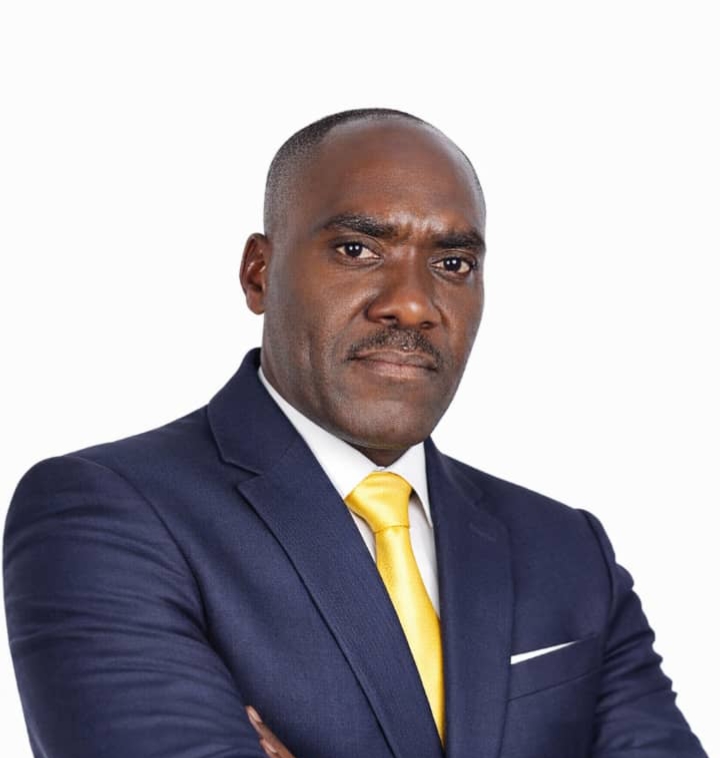
The Writer Atusasire Edmund is a Researcher, Political and Social Analyst.