Authorities in Kabale District have launched the distribution of 170,000 long-lasting insecticide-treated mosquito nets to 79 parishes in Kabale Municipality and the district as part of efforts to reduce malaria infections and support Uganda’s malaria elimination campaign.
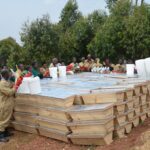
The consignment forms part of the Ministry of Health’s nationwide campaign to distribute 25.8 million mosquito nets across 130 districts. According to the World Health Organization, one mosquito net is recommended for every two people to ensure adequate household protection. The consignment was officially received at the district headquarters on Tuesday after being delivered by the National Medical Stores (NMS).
Leading the NMS team, Raymond Kawalya said the institution has commenced the delivery of 3,404 bales of MedNet mosquito nets to all 79 parishes ahead of the Ministry of Health’s official household distribution exercise.
Kawalya explained that the mosquito nets will be handed over to parish chiefs, who will serve as custodians until the Ministry of Health begins distributing them to beneficiaries. He said every handover will be witnessed by the respective LC I or LC II Chairperson together with Village Health Team (VHT) members to promote transparency, accountability and proper documentation throughout the exercise.
He added that the NMS team will remain in Kabale until all the allocated mosquito nets have been delivered to the designated parish stores to ensure every parish receives its allocation before the official distribution exercise begins.

Speaking during the launch, Rukia Nakamatte, a Communication Specialist with the National Malaria Elimination Division, urged district leaders to strengthen community mobilisation and coordination ahead of the nationwide distribution of mosquito nets.

Nakamatte said the Ministry of Health is implementing the campaign in five phases, with Kabale among the 38 districts in the fourth phase. She noted that while mosquito nets have already been delivered to most districts in the phase, the actual household distribution will take place simultaneously across all fourth-phase districts in August.
She revealed that about 6.8 million mosquito nets will be distributed during the fourth phase, covering districts in the Kigezi, Buganda and Karamoja regions. The nationwide exercise is expected to conclude in September with the distribution of mosquito nets in Kampala and Wakiso districts.
Nakamatte announced that district leaders will participate in a regional engagement meeting during the first week of August, where Ministry of Health officials will brief them on the implementation plan, budgets, roles and responsibilities. She further called upon the Resident District Commissioner (RDC) to establish a district coordination committee to oversee the exercise and urged all stakeholders, including LC I Chairpersons and Village Health Teams (VHTs), to intensify community sensitisation on the proper use of mosquito nets.
Nakamatte expressed concern that in some areas where mosquito nets have already been distributed, some beneficiaries have misused them by covering poultry houses and gardens instead of sleeping under them. She noted that the Kigezi sub-region is among the first regions where Uganda will begin implementing its malaria elimination strategy as the country works towards achieving a malaria-free Uganda by 2035.
She emphasized that the success of the campaign will depend not only on distributing the mosquito nets but also on ensuring they are used consistently and correctly by households.
CUE IN NAKAMATTE……ON DISTRIBUTION EXERCISE…..ENG//
The Kabale District Health Educator and HIV Focal Person, Alfred Besigensi, urged residents to use the newly distributed mosquito nets for their intended purpose, warning that misuse could undermine efforts to eliminate malaria in the district.
Besigensi described the distribution exercise as a major milestone in strengthening malaria prevention. He noted that although Kabale records relatively fewer malaria cases compared to many districts, the disease remains a public health concern, with new infections still being reported.
He emphasized that malaria is preventable but continues to claim lives, urging communities to embrace preventive interventions. He also commended the Government and its development partners for investing substantial resources in procuring and distributing mosquito nets.
Besigensi appealed to the RDC, security agencies and local leaders to discourage the misuse of mosquito nets and urged residents who do not intend to use the nets to allow them to be allocated to households that will use them effectively.
CUE IN BESIGENSI……ON MOSQUITO NETS……ENG//
Kabale District Principal Assistant Secretary, Gordon Manzi, called on residents to use the mosquito nets properly, saying the intervention will significantly reduce malaria infections if households consistently sleep under them.
He expressed concern over previous cases where mosquito nets were diverted for other domestic activities and warned against their illegal sale and smuggling to neighbouring countries.
Manzi urged security agencies, including Gombolola Internal Security Officers (GISOs) and Parish Security Officers (PSOs), to work closely with local leaders to ensure the mosquito nets reach the intended beneficiaries. He also tasked the district health department to conduct routine monitoring to ensure beneficiaries use the mosquito nets correctly.
He further stressed the need for comprehensive household registration and mapping to ensure that no eligible household or institution is left out during the distribution exercise.
CUE IN MANZI…ON THE MOSQUITO NETS……ENG//
Kabale District Vice Chairperson, Prima Hellen Kemanzi, urged beneficiaries, especially pregnant women, to sleep under mosquito nets consistently to protect themselves against malaria and reduce maternal deaths. She also warned residents against using mosquito nets for fishing and other unintended purposes.
CUE IN KEMANZI…. ON MOSQUITO NETS……RR//
Launching the distribution exercise, Kabale Deputy Resident District Commissioner (DRDC), Micheal Muramira Kyakashari, said that although Kabale has traditionally registered relatively low malaria prevalence compared to many parts of the country, recent years have seen isolated pockets of infections, making the intervention timely and necessary.
He urged residents to use the mosquito nets strictly for malaria prevention instead of diverting them for other domestic activities. Kyakashari also warned against the illegal sale and smuggling of mosquito nets across the border, noting that some unscrupulous traders purchase government-issued mosquito nets for resale in neighbouring countries.
He added that the district will utilise existing local government and security structures, including GISOs, local leaders and village committees, to ensure that the mosquito nets reach the intended beneficiaries and contribute to reducing malaria infections across Kabale District.
CUE IN KYAKASHARI……ON THE MOSQUITO NETS……RR/ENG//