
The Kabale District Local Government has outlined its key development priorities for the 2026/2027 Financial Year, with a focus on infrastructure development, human capital improvement, agro-industrialization, water and sanitation, and the full implementation of the Parish Development Model (PDM).
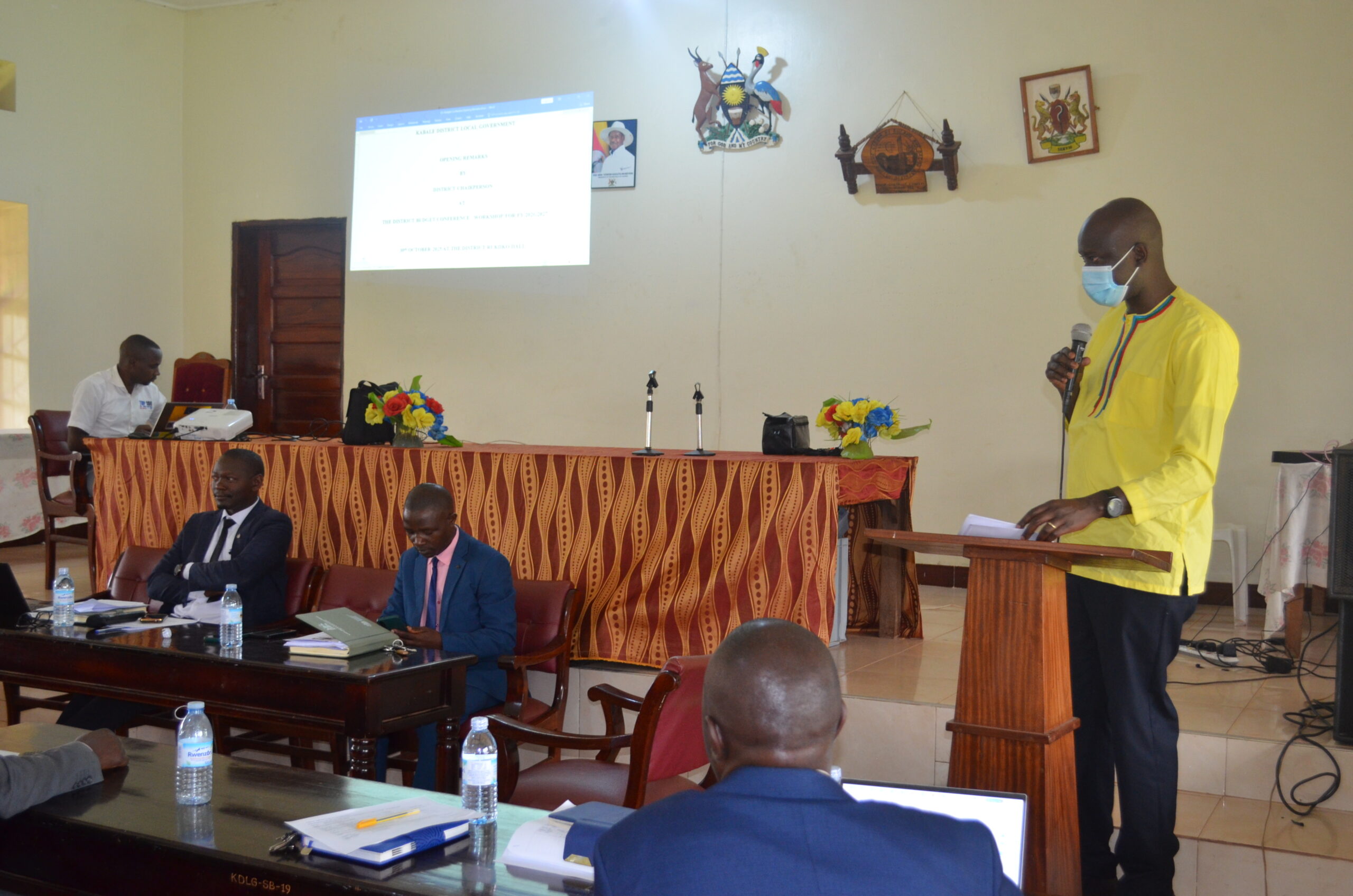
This was announced by the District LCV Chairperson, Nelson Nshangabasheija, while officiating at the District Budget Consultative Meeting on Thursday at the District Rukiiko Hall. The meeting brought together political leaders, technical officers, development partners, civil society organizations, and community representatives to deliberate on investment priorities and align district plans with national development goals.
Nshangabasheija said the consultative conference provides a vital platform for identifying interventions that will shape the District Work Plan and Budget for FY 2026/2027 before submission to the District Council for approval.
“Our focus will remain on improving road infrastructure, strengthening education and health services, enhancing community mobilization and mindset change, and promoting agro-industrialization through value addition,” Nshangabasheija stated. “We must also ensure effective implementation of the Parish Development Model to lift more households from subsistence to commercial production.”
He commended all stakeholders, including political leaders, technical officers, and implementing partners, for their commitment to service delivery and prudent management of government programs.

Presenting the district’s preliminary resource envelope, Deputy Chief Administrative Officer Robert Mugabe, representing CAO Ronald Mutegeki, revealed that Kabale District expects a total budget of UGX 51.01 billion for FY 2026/2027.

Of this amount, UGX 48.99 billion (96%) will come from central government transfers, UGX 937.4 million (1.9%) from locally raised revenue, and UGX 1.08 billion (2.1%) from external or donor funding.
Mugabe emphasized that the district’s priorities are aligned with the Fourth National Development Plan (NDP IV) and the Five-Year District Development Plan, aimed at transforming Kabale from a predominantly peasant economy to a modern and prosperous district by 2040.
He noted that government’s broader objective is to monetize the economy, with the parish economy playing a central role. Findings from the 2024 National Population and Housing Census show that the proportion of households engaged in subsistence farming has dropped from 39% in 2019 to 33%.
To sustain this progress, Mugabe said parish chiefs will be required to monitor and annually report on the performance of their respective parish economies through the State of the Parish Economy and Asset Register (SPEAR) report. A detailed update on the performance of the PDM will be presented by the District Commercial Officer.
In his remarks, Deputy Resident District Commissioner Michael Muramira Kyakashaari stressed the importance of discipline, integrity, and accountability in implementing government programs.
“When there is a functional and responsible government, priorities at the district level are achieved,” Kyakashaari said. “We must strengthen technical planning and ensure that extension workers remain focused on their duties, not private business. We are going to act firmly where negligence is reported.”
The District Budget Conference marked a key milestone in Kabale’s planning cycle, setting the tone for inclusive, evidence-based, and accountable budgeting that supports both local and national development aspirations.