





Kabale District Local Government has set a preliminary resource envelope of Shs53.13 billion for the 2027/2028 financial year, with leaders calling for strategic investments in water for production, feeder roads, agricultural commercialisation and tourism development to accelerate economic growth and improve household incomes.
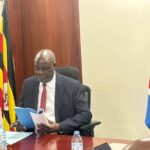
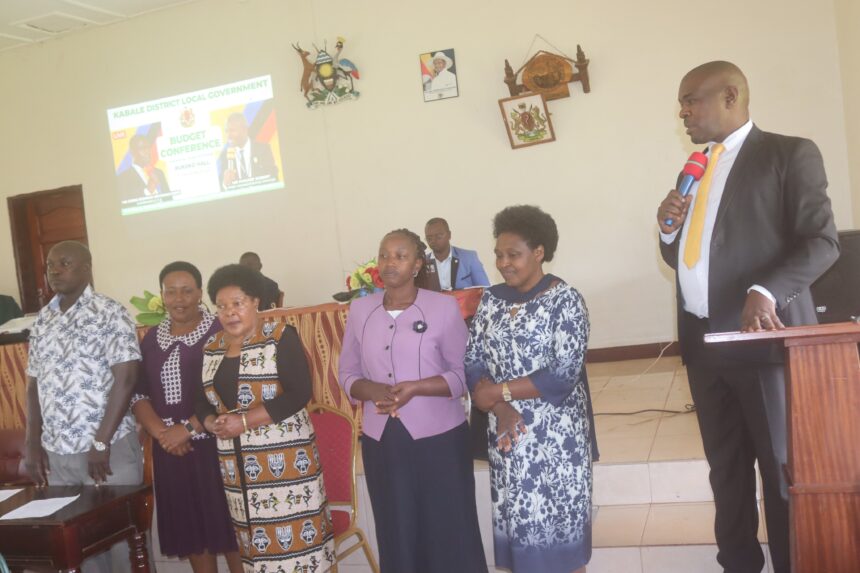
The proposed resource envelope of Shs53,133,549,666 was announced by Chief Administrative Officer Robert Mugabe during the district’s Budget Consultative Conference held on Wednesday, November 11, 2026.
According to Mugabe, the preliminary allocation comprises Shs37.16 billion for wage grants, Shs13.87 billion for non-wage recurrent expenditure and Shs2.09 billion for development grants.
He noted that the large proportion of funding committed to wages, coupled with the relatively limited development component, requires careful prioritisation and efficient utilisation of available resources.
Mugabe urged political leaders, technical officers and other stakeholders to align the district’s budget priorities with the national development agenda, particularly the Tenfold Growth Strategy and its four economic growth anchors under the ATMS framework: Agro-industrialisation, Tourism Development, Mineral-Based Industrial Development, and Science, Technology and Innovation.

He said Kabale has considerable economic potential in agriculture, tourism and mineral development, citing its fertile soils, Lake Bunyonyi, attractive landscapes and iron ore deposits.

However, he observed that poverty and low household incomes remain challenges in some communities, largely because many households depend on subsistence agriculture and struggle to translate their production into meaningful earnings.
“Our challenge is therefore not simply production; it is productivity, commercialisation, value addition and access to markets,” Mugabe said.

He called for increased investment in coffee, Irish potatoes, horticulture and dairy farming, alongside tourism promotion and responsible mineral development to create employment and expand economic opportunities, particularly for young people and women.
Mugabe also emphasised the need to invest in water for production, noting that Kabale’s hilly terrain and changing weather patterns continue to affect agricultural productivity.
He identified Butanda, Kahunge and Rubaya among the areas requiring strategic interventions to address water shortages, proposing gravity flow schemes, water storage facilities and other appropriate investments.
Other proposed priorities include improving feeder roads to connect production areas to markets, agricultural value addition, tourism infrastructure, education, health, human capital development and effective implementation of the Parish Development Model.
The Chief Administrative Officer also called for stronger collaboration between political leaders and technical officers, saying coordinated leadership was essential for the effective implementation of government programmes.
District Chairperson Denis Nzeirwe Ndyomugyenyi said the conference was an important component of the district’s planning and budgeting process, providing a platform for leaders, technical officers, development partners, civil society organisations and other stakeholders to agree on priorities for the coming financial year.
He urged participants to propose realistic, affordable and implementable interventions that respond to the actual needs of communities and are aligned with the FY2027/2028 Budget Call Circular and the available resource envelope.
Ndyomugyenyi identified road infrastructure, education, health, water and sanitation, agro-industrialisation, tourism development, environmental protection and the Parish Development Model as key areas requiring continued attention.
He further called for transparency, accountability and value for money in the management of public resources, noting that the district’s development needs remain many while available resources are limited.
The Chairperson also acknowledged administrative challenges that have affected the district’s working environment following the October 23, 2026, visit by the Minister of Local Government, Balaam Barugahara Ateenyi.
He said the minister’s visit brought several service delivery, accountability and administrative issues to the attention of the district and relevant authorities, prompting administrative interventions, investigations and follow-up actions.
Ndyomugyenyi disclosed that the unstable working environment contributed to the postponement of the budget conference, which had initially been scheduled for October 28, 2026.
However, he emphasised that administrative challenges should not disrupt institutional operations or the delivery of essential public services.
“The institution of Kabale District Local Government must remain functional regardless of the administrative challenges we experience,” Ndyomugyenyi said, urging leaders and staff to remain calm, disciplined and focused on their responsibilities.
He called for stronger financial accountability, procurement management, contract supervision, local revenue mobilisation and monitoring of government programmes to ensure that every shilling allocated to the district delivers value.
The proposals generated from the conference will inform the preparation of the District Budget Framework Paper, annual work plan and budget for FY2027/2028, subject to national guidelines and approval by the District Council.