








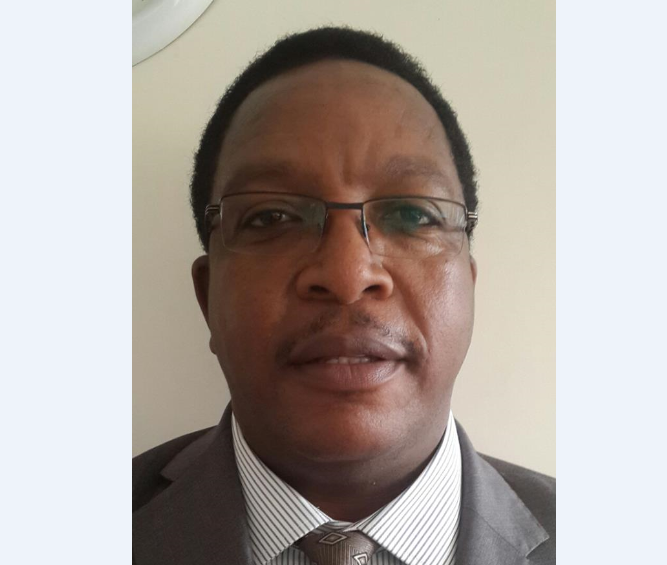

Kigezi leaders have been asked to make mineral development a deliberate regional agenda to fight poverty, create jobs and promote local industries.
The call was made by Dr Francis Runumi, an elder on behalf of Kigezi Development Stakeholders, in a letter dated October 3 addressed to Members of Parliament, district chairpersons, mayors, councillors and other leaders in the sub-region.
Dr Runumi said Kigezi has substantial mineral resources that could become an important driver of economic transformation if properly explored, developed and processed locally.
According to the letter, the Directorate of Geological Survey and Mines has documented about 152 million tonnes of iron ore at Muko in Rubanda, 48 million tonnes at Buhara in Kabale, about 50 million tonnes at Butogota in Kanungu and about eight million tonnes in several locations in Kisoro.
The letter, however, cautions that the figures represent geological resources that require further exploration, assessment and investment before they can be regarded as economically recoverable reserves.

Kigezi and southwestern Uganda also have occurrences and potential for tungsten, tin, tantalum, gold, limestone, amethyst, pozzolana, bentonite, beryllium, granite, peat, pumice, basalt and quartz, according to the document.

Dr Runumi said mineral resources should not be viewed merely as materials to be extracted and exported, but as a foundation for employment, skills development, local enterprises, processing and manufacturing.
“Minerals in the ground are not yet wealth. They become wealth when they generate employment, enterprises, skills, processing, manufacturing, infrastructure and sustainable household incomes,” he said.
Local participation
The stakeholders said Kigezi needs investors to provide capital, modern exploration technology, geological expertise, equipment, processing technology and access to markets, but warned against a model in which local communities remain spectators.
They proposed a development model bringing together investor capital, international technology, government support, local participation, skills, suppliers and processing to ensure mineral wealth benefits communities.
The document calls for major mining projects to be assessed not only on the volume of minerals produced and taxes paid, but also on local employment, participation of Ugandan enterprises, local procurement, skills and technology transfer, value addition, manufacturing and infrastructure development.
The stakeholders also want young people trained for skilled jobs such as machine operation, mechanics, electrical work, welding, geology, surveying, laboratory technology, engineering and environmental management rather than being confined to casual labour.
They further propose that local cooperatives, SACCOs, investors and Ugandan companies participate as shareholders, contractors, suppliers and service providers where commercially and legally feasible.
Push for value addition
The letter proposes that Kigezi moves beyond exporting raw minerals and develops a mineral-based industrial chain from extraction to processing and manufacturing.
For iron ore, the proposed chain is mining, crushing, beneficiation, concentration, pelletisation, direct reduced iron or pig iron, steel production and manufactured products.
Such industries, the stakeholders argue, could support the production of reinforcement bars, roofing materials, agricultural implements, machinery components, tanks, trailers, gates and fencing materials.
They also argue that a growing mining and industrial economy could create markets for agricultural products such as milk, meat, poultry, potatoes, bananas, vegetables and fruits.
Call for government support
The stakeholders want Members of Parliament to push for stronger implementation of provisions on local content, community participation, skills and technology transfer, value addition and community development agreements under the Mining and Minerals Act, 2022.
They also want government to establish or strengthen financing mechanisms for Ugandan enterprises and community organisations involved in mineral exploration, equipment acquisition, beneficiation and mineral-based manufacturing.
Another proposal is the establishment of a mineral mining equipment leasing facility through which qualified local enterprises and cooperatives could access excavators, crushers, drilling and haulage equipment without purchasing the machinery upfront.
The stakeholders further called for comprehensive mineral-resource mapping and exploration in Kigezi to establish the location, quantities, grades and commercial viability of the region’s mineral deposits.
District leaders, meanwhile, have been asked to incorporate responsible mineral development into local development plans, support skills development, facilitate dialogue between communities and investors, promote environmental protection and identify opportunities for local businesses to supply mining projects.
100-day action plan
The letter proposes a 100-day action plan for Kigezi leaders.
Within 30 days, MPs would establish a coordinated parliamentary platform on mineral development and seek a consolidated briefing from the Ministry of Energy and Mineral Development, the Directorate of Geological Survey and Mines and the Uganda National Mining Company on the region’s mineral potential and ongoing activities.
Within 60 days, leaders would engage government agencies, financial institutions and technical institutions on geological mapping, local participation, equipment financing, skills development, mineral processing and investment mobilisation.
Within 90 days, they would prepare proposals for a Kigezi Mineral Resource Mapping Programme, a mineral development financing window, a mining equipment leasing facility, a mineral laboratory and beneficiation centre, and a mineral skills programme.
By the 100th day, leaders would consider adopting a Kigezi People-Centred Mineral Development Declaration setting out agreed objectives, responsibilities and measurable five-year targets.
Dr Runumi said the ultimate measure of mineral development should not simply be the amount of minerals extracted, but the number of people whose economic lives improve as a result.
“The minerals beneath our feet should become an opportunity to lift the people above poverty,” he said.



