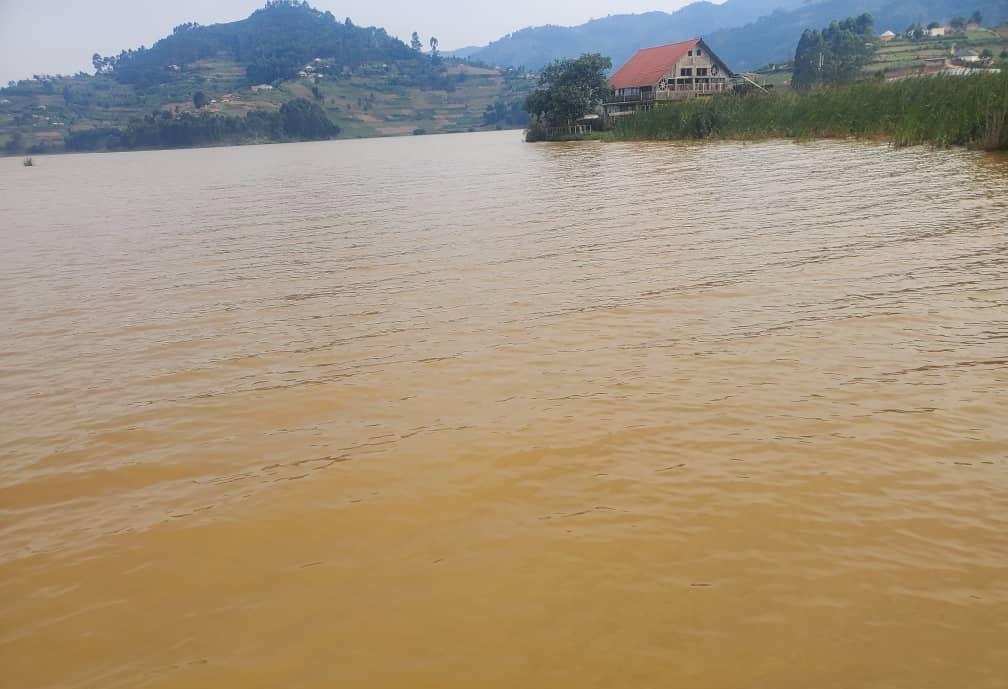

Environmentalists have raised concern over unusual changes at Lake Bunyonyi, Africa’s second-deepest lake, after its waters suddenly turned brown and began emitting a strong, foul odor.
During a visit to the lake, our reporter observed the discolored water and noted that aquatic animals had moved from the deeper parts to the surface, a rare occurrence that has alarmed communities living around the lake.
The changes were first noticed last week, particularly in areas near Bwaama and Punishment Islands, where the water took on a muddy brown hue. Residents have also reported a foul smell and an oily substance floating on the surface.
Henry Tumwesigye, the Kabale District Natural Resources Officer, acknowledged the unusual changes at the lake but declined to speak to our reporter, citing strict guidelines enforced by the District Chief Administrative Officer.
Dr. Alex Saturday, a lecturer of ecology at Kabale University who did an assessment on Tuesday, attributed the phenomenon to low oxygen levels in the lake. He explained that the movement of aquatic animals to the surface indicates they are fleeing harsh conditions at the bottom in search of oxygen.

Dr. Saturday called for urgent measures to restore buffer zones around Lake Bunyonyi to prevent direct surface runoff from entering the water body.

CUE IN DR SATURDAY…..ON THE ISSUE…..RR/ENG//
Lake Bunyonyi is estimated to be about 900 meters deep, making it the country’s deepest lake and the second-deepest in Africa. With 29 islands and terraced hills surrounding it, the lake is a unique ecological and tourism destination, but one now facing growing environmental stress.