
The Alliance Fleuve Congo/Mouvement du 23 Mars (AFC/M23) has accused the Kinshasa government of politicising a recent deadly mining accident in Rubaya, saying authorities are using the tragedy to deflect attention from long-standing failures in the management of the Democratic Republic of Congo’s mining sector.
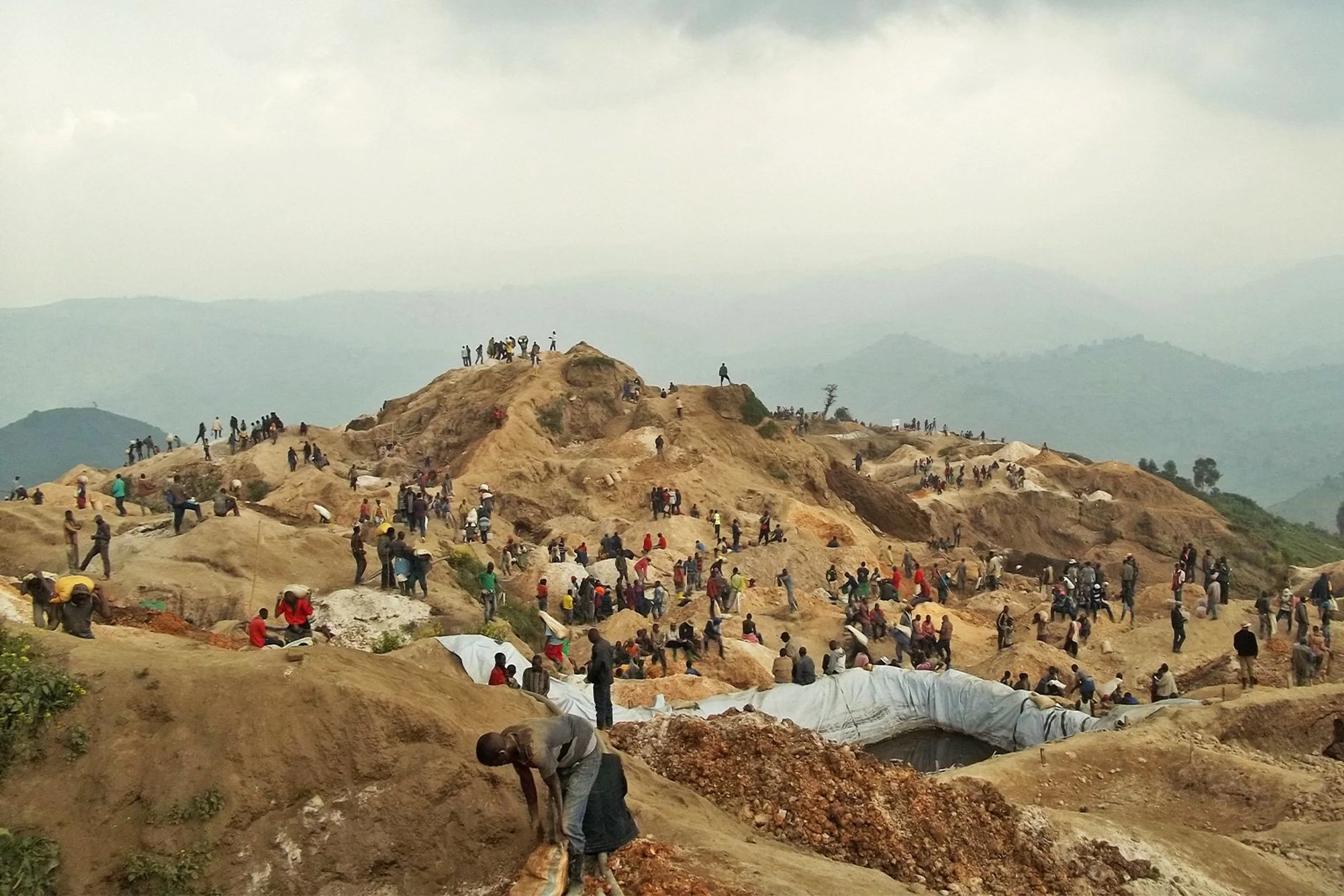
The mine, in the town of Rubaya, gave way on Wednesday due to heavy rains, Lumumba Kambere Muyisa, spokesman for the North Kivu region’s rebel governor, told reporters. At the time, the death toll remained unclear.
In a press statement issued on Sunday in Goma by Lawrence Kanyuka, Head of the AFC/M23 Department of Communication, said the incident in Rubaya, which followed torrential rains in artisanal mining areas, should have been met with restraint and compassion rather than political rhetoric.
According to Kanyuka, the government’s response overlooks a long history of mining-related disasters attributed to weak regulation, poor safety standards, and institutional neglect.
Kanyuka cited a series of fatal mining accidents recorded across the country over the past decade, including collapses in Haut-Katanga, Lualaba, South Kivu, Maniema, Ituri, Kasai, and Bas-Uele provinces.

Among the deadliest incidents mentioned were the 2019 collapse at the KOV Mine in Lualaba that killed at least 43 people, the 2020 Kamituga artisanal mine collapse that claimed more than 50 lives, and the 2023 Nyamukubi and Bushushu landslides in South Kivu where over 500 people were reported dead. More recently, a November 2025 collapse at the Kalando copper and cobalt mine in Lualaba reportedly killed between 30 and 40 miners.

He argued that these repeated incidents point to systemic failures in mine safety oversight, flood management, and urban planning, particularly in Kinshasa.
He called for an independent and transparent audit of governance in the mining sector, instead of what it described as attempts to shift blame following the Rubaya tragedy.
He also expressed sympathy with families affected by the Rubaya accident, noting that many Congolese are forced into dangerous artisanal mining due to lack of stable employment and limited economic opportunities. He described these conditions as a direct consequence of poor governance and underinvestment.
“We have supported the evacuation of seriously injured victims to Goma General Hospital and assisted with the burial of those who lost their lives. I want to reaffirm our commitment to improving safety and working conditions in artisanal mining areas and to advocating for the dignity and protection of miners across the country”. He said.
Rubaya is one of a number of towns across North Kivu under the control of the M23, who international observers say are backed by neighbouring Rwanda, providing photos of Rwandan troops in the country. Rwanda has denied giving military support to the M23.
In its statement after the collapse, the Congolese government repeated its accusation that Rwanda was using the M23 to loot Congolese minerals.
“Mining activities carried out in this context of armed occupation constitute a structured system of looting and illegal exploitation of natural resources, part of an illicit supply chain of industrial scale,” it said.
Although Rwanda has always denied the accusation, UN experts say there is evidence that minerals from DR Congo are being exported through Rwanda.
The mines in Rubaya hold about 15% of the world’s coltan supply and half of the DR Congo’s total deposits.
The metallic ore contains tantalum, which is used to produce high-performance capacitors in a range of electronic devices, making it in high demand worldwide.
Since 2024, the M23 rebels have been in control of the mines. The UN has accused the group of imposing taxes on the mining sector for their own benefit.