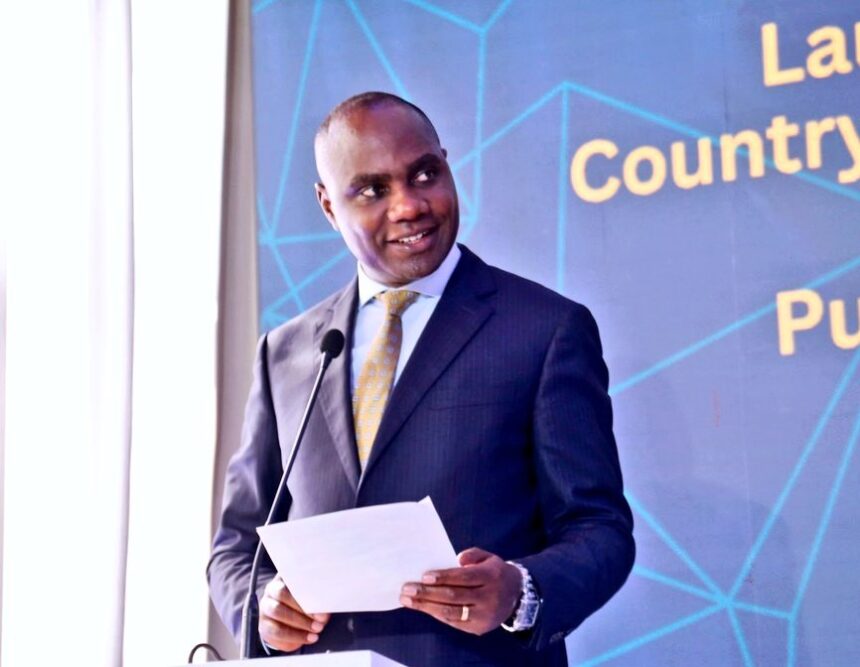

The Government of Uganda, in partnership with the World Bank Group, has launched the Uganda Country Partnership Framework alongside the Public Finance Review, setting out a long-term roadmap to support the country’s ambition of transforming into a modern, prosperous, and competitive upper-middle-income economy by 2040.
The Uganda Country Partnership Framework is a 10-year operational strategy that outlines how the World Bank Group will align its support with Uganda’s development priorities, including the Tenfold Growth Strategy and the Fourth National Development Plan (NDP IV). The framework is expected to help mobilize and enable private capital at scale, targeting about USD 3.8 billion in investments.
It places strong emphasis on wealth creation, job growth, improved economic governance, a healthier and better-skilled population, and enhanced connectivity through quality infrastructure. It also prioritizes a more productive and inclusive private sector as a key driver of growth.
The accompanying Public Finance Review offers an assessment of Uganda’s fiscal outlook as the country enters its oil production era. It stresses that sustainable prosperity will depend not only on oil revenues but also on strong institutions, efficient public spending, improved domestic revenue mobilization, and continued investment in human capital.
Speaking during the launch held at Golden Tulip Hotel, the Minister of Finance, Planning and Economic Development, Henry Musasizi, said government remains committed to the disciplined implementation of the Tenfold Growth Strategy aimed at transforming Uganda into a $500 billion economy.

“Our focus going forward will remain on prudently executing the Tenfold Growth Strategy, enforcing fiscal discipline, enhancing revenue mobilization, promoting wealth creation, and ensuring proper management of oil revenues,” Musasizi said.

He noted that despite global economic shocks, Uganda has maintained macroeconomic stability and strengthened key areas including public financial management, fiscal transparency, debt management, domestic revenue mobilization, and public investment oversight.
“As we scale up public investment, let us remember that development is not measured by the size of our budgets, the number of projects approved, or policies adopted, but by the lives transformed, opportunities created, and the lasting impact on citizens,” he added.
The World Bank Division Director for Kenya, Rwanda, Somalia, and Uganda, Qimiao Fan, said the institution is shifting from isolated project-based support to more comprehensive sector-wide interventions. He reaffirmed the World Bank Group’s commitment to supporting Uganda’s long-term transformation agenda and strengthening inclusive growth.