
The Ndorwa East Member of Parliament, Honorable Wilfred Niwagaba Rugamba’amazima has used his mobilization meetings in Muyebe Parish, Buhara Sub-county to spotlight deeper structural issues affecting livelihoods in the constituency – from unequal access to technical skills training, to underutilized tourism potential, to resistance toward investment and poor adaptation to changing land use.
Speaking at rallies across several polling stations, Hon. Niwagaba argued that while government has invested in tourism roads, more must be done to protect local tourism sites and link them to real economic benefits for ordinary people.
He noted that without community-led protection of hills, wetlands, lakeshores and cultural sites, the improved road network will only serve transit traffic instead of promoting local tourism enterprises such as homestays, guides, crafts and hospitality services.
Skills Gap: Industrial Hubs Leaving Rural Youth Behind
Hon. Niwagaba raised concern over the current model where one Presidential Industrial Hub serves six districts, pointing out that this limits access to technical and vocational skills for many qualified youth. Residents complained about the limited intake at the Kigezi Presidential Industrial Hub, which leaves many applicants from Ndorwa East locked out.
He called for constituency-based technical schools and skilling centres, arguing that without localized training in trades such as carpentry, mechanics, welding, tailoring and agribusiness, the region will continue to produce jobless youth even as government promotes industrialization at the national level.

Investment Resistance Costing the Area Jobs
The MP also tackled the persistent resistance to investors, noting that some communities have previously refused to release land for credible investment projects. He cited cases where investors diverted projects to neighbouring districts like Ntungamo after failing to secure land in Ndorwa East.

Niwagaba warned that this trend is costing the constituency potential factories, agro-processing plants and tourism lodges that could create jobs and expand the local tax base.
He urged residents of Buhara and the wider constituency to differentiate between land grabbing and legitimate investment, and to negotiate fairly instead of outright rejection of development proposals.
Weak Uptake of Government Economic Programs
Another key issue he highlighted was the low or uncoordinated uptake of government economic empowerment programs, including Parish Development Model (PDM), Emyooga, UWEP and the Youth Livelihood Programme.
He appealed to households to get organized instead of waiting for handouts, advising older persons above 60 years to form groups of at least five members and register with sub-county Community Development Officers (CDOs) to access low-interest government loans.
According to him, failure to organize at community level means Ndorwa East risks lagging behind other regions in absorbing these funds.
Wetland Use, Climate Pressure and Livelihood Shifts
On environment and livelihoods, Hon. Niwagaba returned to the contentious issue of wetland use. With potato growing becoming increasingly difficult in some wetland areas, he encouraged residents to shift to fish farming as an alternative income source that is more compatible with wetland conservation guidelines.
Residents praised the MP for consistently advocating for a balanced approach to wetland regulation, protecting the environment while safeguarding livelihoods in a region where wetlands have long been central to household income.
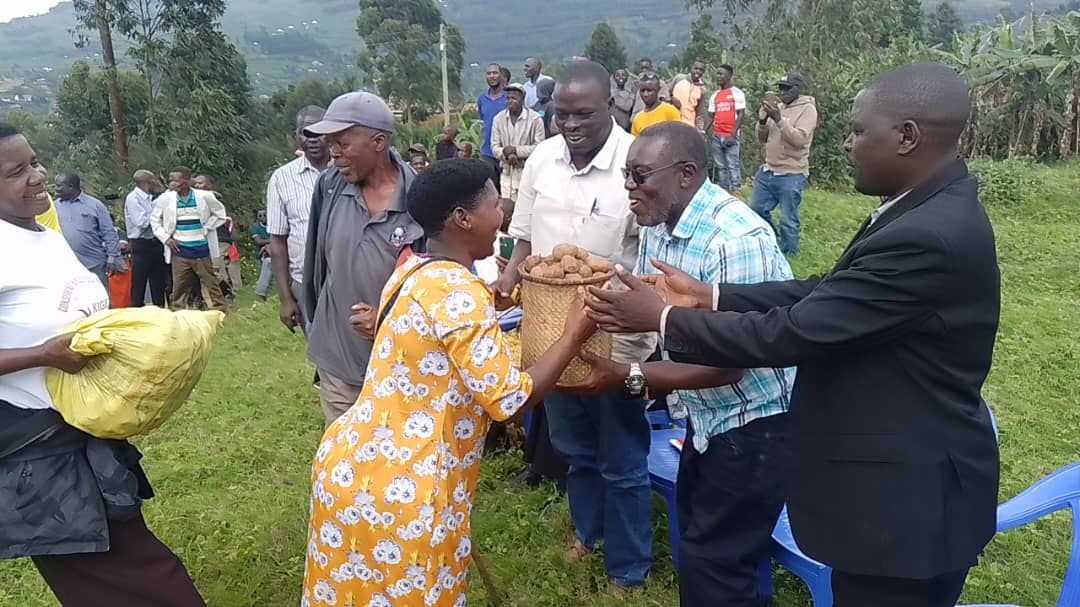
They also appreciated his support in distributing hoes and forked hoes to boost agricultural productivity as farmers adapt to changing conditions.
Community Commitment, But Policy Questions Remain
The rallies ended with renewed pledges from locals to protect natural resources, welcome credible investors and engage more actively with government programs.
However, Niwagaba’s engagements exposed deeper policy questions that go beyond one constituency:
- Is the one-hub-for-six-districts model aggravating inequality in access to technical skills?
- How will government balance tourism road investments with real support to community-led tourism enterprises?
- What safeguards and guidelines are needed so that communities can confidently host investors without fear of exploitation?
- How can wetland regulations be enforced in a way that promotes climate resilience while protecting rural incomes?
By framing his campaign trail speeches around these structural issues, Hon. Niwagaba has turned routine rallies in Ndorwa East into a platform for debating the future of skills, land use, investment and environmental management in rural Uganda.