
Summary:
- NRM Secretary General, Richard Todwong, echoed these sentiments, emphasizing the importance of a well-organized opposition in a democratic system.
KAMPALA: The National Resistance Movement (NRM) on Tuesday, 15th October 2024, rejected the Lumu Bill, which proposes elections for the Leader of the Opposition.
The party argued that such elections would weaken the main opposition party’s power to select its preferred leader, undermining the effectiveness of a structured opposition that is necessary for challenging the ruling party’s governance.
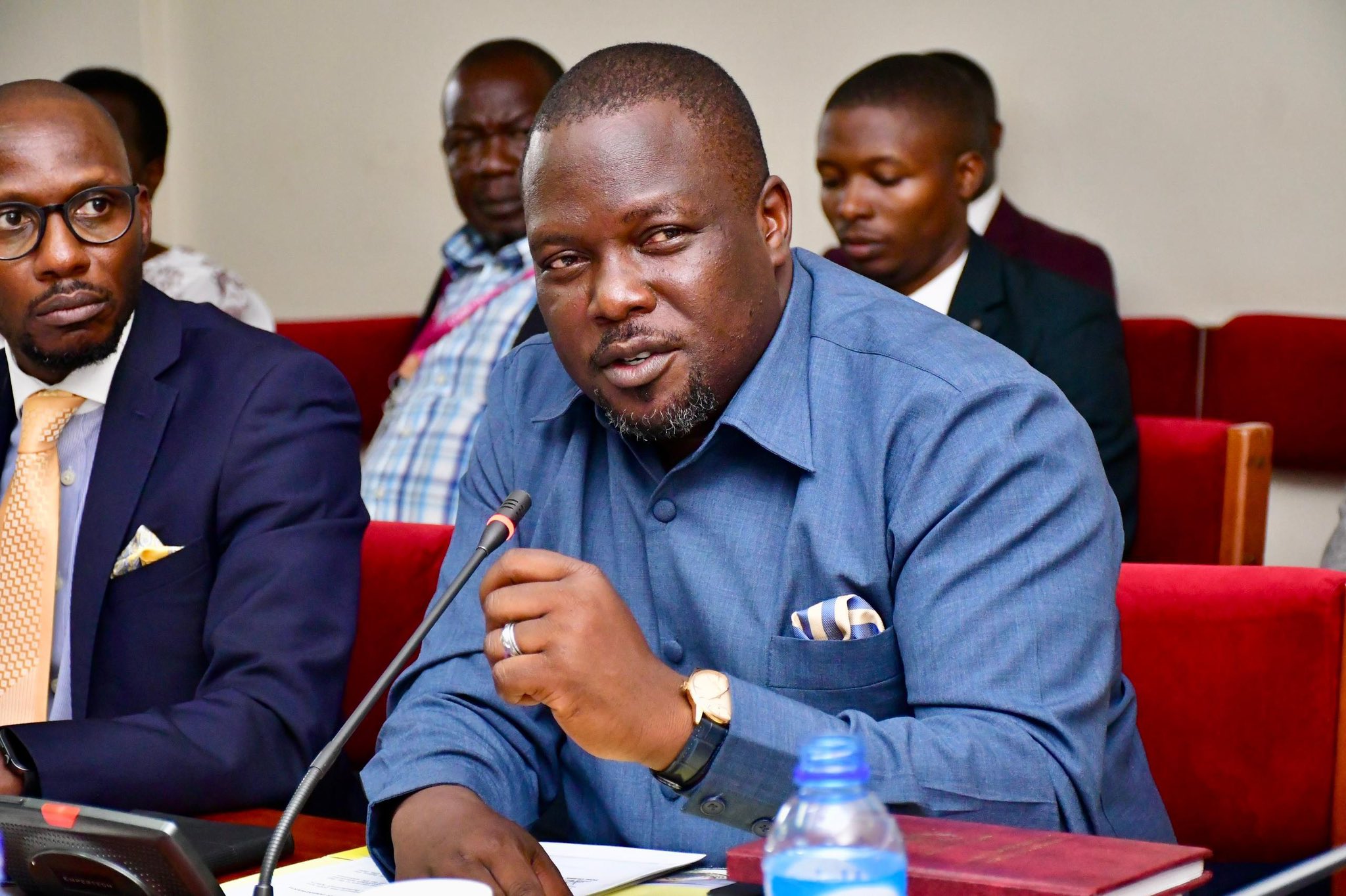
Enoch Barata, NRM’s Director of Legal Affairs, made the remarks while appearing before the Legal and Parliamentary Affairs Committee. He presented the party’s views on the Administration of Parliament (Amendment) Bill, 2024, which was tabled by Richard Lumu, the MP for Mityana South.

“The office of the Leader of Opposition has specific functions that should not be subjected to interference from other political parties in the House. This undermines multi-party democracy and negates the popular vote,” Barata argued.

He added “We believe that electing the Leader of Opposition from among different parties would strip the main opposition of its rightful power. Therefore, we propose that the law remain unchanged.”
NRM Secretary General, Richard Todwong, echoed these sentiments, emphasizing the importance of a well-organized opposition in a democratic system.
“We are in leadership because of the popular vote, and it’s in our interest to have an opposition that is organized and thoughtful in their challenges to our governance. It’s better to deal with an opposition that knows what it stands for,” he remarked.
The NRM also opposed Lumu’s proposal to introduce new grounds for the removal of the Leader of the Opposition through a vote by opposition MPs. The party insisted this would infringe on the opposition’s autonomy to discipline its own members.
“For multi-party democracy to thrive, parties must be empowered to grow. Stripping them of that power would create challenges,” Barata warned.
However, the NRM did support removing the Leader of Opposition on grounds of infirmity of body or mind but rejected incompetence and misbehavior as grounds, calling them too vague.
“We find the terms ‘incompetence’ and ‘misbehavior’ too broad and subjective. Natural justice must be served, and if challenged, it could create a stalemate in Parliament,” Barata explained.
Opposition Reactions
Meanwhile, the People’s Progressive Party (PPP) criticized opposition leaders for what it described as intimidation and blackmail of Richard Lumu over his bill.
Sadam Gayira, the National Chairperson of the PPP, expressed concern over the personal attacks on Lumu during his appearance before the Legal and Parliamentary Affairs Committee.
“It is disheartening to see the mover of this bill being subjected to character assassination and intimidation by some opposition leaders. Regardless of the merits or flaws of the bill, such conduct is uncalled for,” Gayira said.
He added that the Leader of Opposition position has faced challenges since 1962, and that this was the third attempt to bring such a bill before Parliament, suggesting the need for reform.
Though the PPP agreed with some aspects of the Lumu Bill, it rejected the proposal to hold elections for the Leader of Opposition.
Gayira explained that such a move would force various political parties to work under a leader they did not choose, thereby undermining the multi-party system.
“We cannot support provisions that impose an elected Leader of Opposition on all parties. In a multi-party democracy, parties must be free to associate or disassociate as they choose. Forcing collaboration through such legislation would compromise party autonomy,” Gayira concluded.