
A newly declared armed movement calling itself the Stand Up Katanga Movement for the Liberation of Congo (MDKC) has claimed to have seized control of Lusinga in Mitwaba Territory, raising fresh security concerns in the mineral-rich Katanga region in the southeastern Democratic Republic of the Congo (DRC).
In a communiqué dated March 6, 2026, the group said its fighters captured the locality on March 3, describing the operation as the first step in what it called an armed struggle against the government of Félix Tshisekedi.
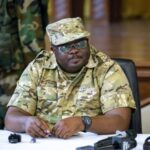
The statement, signed by the group’s spokesperson Colonel Ngoy “Tigre” Kumwimba, accused the government in Kinshasa of closing avenues for political dialogue and attempting constitutional changes aimed at extending its hold on power.
“The situation currently facing Katanga and the Katangese people, as well as the Democratic Republic of the Congo in general, has exceeded the limits of what is tolerable,” the group said, declaring its intention to “liberate Katanga and the Congo from tyranny.”
The movement also called on officers and soldiers of the Armed Forces of the Democratic Republic of the Congo to dissociate themselves from the government and join the rebellion, while urging civilians to engage in what it described as “popular resistance.”

However, Congolese authorities have dismissed the claims and say the situation on the ground is under control.

According to authorities, calm has returned to Lusinga following the incident, while the Congolese army has launched military operations across Mitwaba Territory to secure the area.
Local officials also reported that five agents of the Institut Congolais pour la Conservation de la Nature (ICCN) were killed during the attack, although the MDKC statement did not mention the deaths.
The emergence of the group has sparked speculation on social media, with some users attempting to link the movement to former president Joseph Kabila.
No evidence has publicly confirmed such claims.
Kabila, who led the country from 2001 to 2019, is politically associated with the Katanga region through his family roots and long-standing support base in key cities including Lubumbashi, Kolwezi and Likasi.
His name has resurfaced in political debates since his return to the country in April 2025 after a period abroad. During that visit, he travelled to Goma, then under the control of the March 23 Movement (M23), where he held meetings with religious leaders and local opinion figures to discuss the ongoing security crisis in eastern Congo.
The government later criticized the engagements, alleging possible links between Kabila and the rebel movement, accusations that he and his allies have strongly denied.
Security analysts warn that the appearance of a new armed group in Katanga could heighten tensions in one of the country’s most strategically important regions, known for vast deposits of copper and cobalt.
If the MDKC manages to gain support or form alliances with other armed groups operating in the country, experts say it could further complicate the already fragile security situation in the Democratic Republic of the Congo.
The country already faces a complex conflict landscape. Security researchers estimate that more than 120 armed groups are active in eastern Congo alone, while some government assessments suggest the number of local militias and foreign armed movements could exceed 250.
Many of these groups begin as community self-defence militias formed along ethnic lines but later evolve into insurgent movements seeking political influence, territorial control or access to lucrative mineral resources.