
“Freedom is fragile and must be protected. To sacrifice it even as a temporary measure, is to betray it.” – Germaine Greer
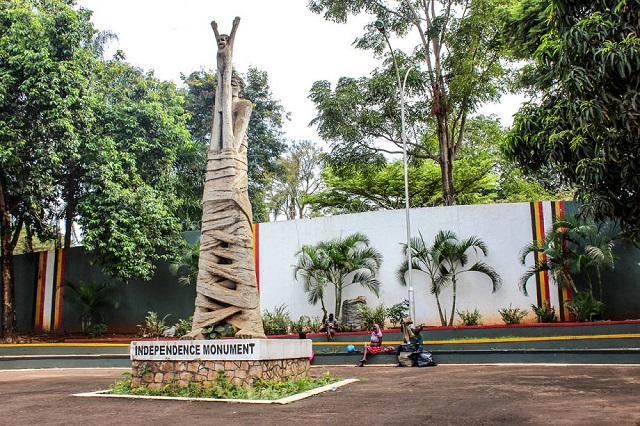
On the morning of Tuesday, 9th October 1962, Ugandan’s from all walks of life, regardless of tribe, class, or background, celebrated the historic moment when the Union Jack was lowered and the Ugandan flag was raised.
Independence came with immense hope: that citizens would enjoy free education and healthcare, that girls would have equal access to school, that Ugandan teachers would replace the British in classrooms, that Ugandans would thrive in business; that tribal divisions imposed by colonialism would be erased and above all, that Uganda would make her own decisions without reference to London.
Remembering Our Independence Agitators
Contrary to the belief that independence was simply “handed over,” Uganda’s freedom was fought for, through civil disobedience, political organizing, and the awakening of a national consciousness that rendered colonial rule untenable.
Pan-African ideals deeply inspired Uganda’s independence leaders, whose sacrifices must never be forgotten. Among them were:

- Ignatius Kangave Musaazi – founder of the Uganda National Congress (UNC) in 1952, assisted by Abubakar Kakyama Mayanja (Buganda), Stefano Abwangato (Bugisu), Yekosefat Engur (Lango), Ben Okwerede (Teso), and S.B. Katembo (Toro).
- Sir William Wilberforce Nadiope – part of Uganda’s delegation to the 1961 Lancaster Conference.
- Benedict Kiwanuka – Uganda’s first Prime Minister in 1962.
- Semakula Mulumba – a fearless agitator whose scholarship was cancelled by the British due to his activism, but later supported by the Bataka Party to complete his studies abroad.
- Grace Ibingira – co-founder of the UPC, elected to the Legislative Council in 1960.
- Tiberio Okeny, John Kakonge, William Wilberforce Rwetsiba and others—who played critical roles in shaping the 1962 Constitution and pushing for sovereignty.
We salute these brave men and women whose sacrifices laid the foundation for the Uganda we cherish today. This day is not only for us, but for all who value human freedom and liberty across the world.

Uganda’s Turbulent Journey After Independence
Uganda’s independence was ushered in by a coalition of Uganda People’s Congress (UPC) led by Apollo Milton Obote and Kabaka Yekka (KY) led by Kabaka Edward Mutesa II, formed to counter the Democratic Party (DP) of Benedict Kiwanuka. Obote became Prime Minister in 1962, while Kabaka Mutesa II was elected ceremonial President in 1963.
However, the uneasy alliance soon broke down. By 1966, Obote ordered his army chief, Idi Amin, to storm the Kabaka’s palace. Mutesa fled into exile in the UK, kingdoms were abolished, and Obote consolidated power under a new constitution.
This marked Uganda’s first “false start” as dictatorship, coups, and economic collapse followed:
- Idi Amin’s regime (1971–1979): Over 300,000 Ugandans were killed, Asians expelled, wildlife decimated, and the economy ruined. His invasion of Tanzania in 1978 led to his downfall.
- Obote II (1980–1985): After rigged elections, widespread brutality ensued. Civil war erupted in the Luwero Triangle, leading to mass atrocities.
- The NRA Struggle (1981–1986): Led by Yoweri Museveni, the National Resistance Army (NRA) grew from 40 fighters to over 20,000, eventually capturing Kampala in January 1986.
Uganda Under the NRM
President Yoweri Kaguta Museveni, in power since 1986, ushered in reforms that restored stability, attracted investment, and returned multiparty politics.
A new Constitution was adopted in 1995. Rebel groups in the north, most notably the Lord’s Resistance Army, were defeated by 2006, and Uganda has since enjoyed relative peace across its borders.
Economic Transformation
Uganda’s economy has grown steadily at an average of 6% over the past three decades, with a GDP of UGX 226.3 trillion (USD 61.3 billion) and USD 174.2 billion in PPP terms. Growth spans agriculture, industry, ICT, and services.
Key drivers of Uganda’s Vision 2040 include:
- Agro-industrialization
- Tourism
- Mineral development
- Science, Technology, and Innovation (STI)
Uganda is also strengthening integration through the EAC, COMESA, and SADC Tripartite Free Trade Area (effective July 2024), and operationalized its first AfCFTA Export Facility in December 2024 to boost exports in coffee, dairy, fish, and pharmaceuticals.
Education Progress
The launch of Universal Primary Education (UPE) in 1997 dramatically increased enrolment from 2.5 million (1996) to 8.6 million (2023). Achievements include:
- Improved gender parity (index rose from 0.88 in 1997 to 1.04 in 2021).
- Better pupil-teacher ratios and textbook availability.
- Increased enrolment of children with disabilities.
- Growth in teacher numbers (81,564 in 1996 to 136,819 in 2023).
- Expansion of vocational and higher education institutions.
Infrastructure & Energy
- Energy: Uganda’s generation capacity now stands at 2,052 MW, led by the 600 MW Karuma Hydropower Plant. Over 2.1 million people are connected to the grid, advancing the universal access goal by 2030.
- Transport: The paved road network now exceeds 6,850 km. Major bridges and airports are under construction, while rail rehabilitation and the East African Crude Oil Pipeline (EACOP) are advancing regional integration.
ICT Development
- Over 4,354 km of optic fibre laid, linking 1,523 government institutions.
- Internet penetration stands at 64%, with 40% of government services online.
- ICT hubs and innovation centres established to support a digital economy.
Health Advances
- 86% of Ugandans now live within 5 km of a health facility.
- Health infrastructure includes 2 national referral hospitals, 19 regional hospitals, and thousands of lower-level health centres.
- Routine immunization coverage exceeds 80%, with the R21 malaria vaccine integrated in 2025.
Towards Shared Prosperity
As we mark 63 years of independence, Uganda acknowledges both the triumphs and struggles of her journey. President Museveni’s government has rolled out poverty-alleviation programmes such as Emyooga, the Parish Development Model, Youth Livelihood Fund, and Skilling Uganda.
These are designed to promote prosperity for all, rooted in unity, hard work, and national identity.
Uganda’s democracy is steadily maturing, and sectarian divisions planted by colonialism are gradually being dismantled.
Conclusion
As Ugandans gather at Kololo Ceremonial Grounds to celebrate this milestone, let us reflect on our shared journey and embrace the theme of unity in diversity.
Independence was not an end, but a beginning, a continuous journey towards peace, prosperity, and dignity for all.
Happy 63rd Independence Anniversary, Uganda!