








Uganda’s longstanding health system gaps, from chronic underfunding and disease outbreaks to shortages of critical medicines, are at the centre of a new five-year, USD 2.3 billion bilateral cooperation framework signed between Kampala and Washington.
The agreement, signed at the Ministry of Finance on Wednesday, seeks to shift Uganda from donor dependency toward a more resilient, self-sustaining health system capable of preventing and responding to both emerging and existing infectious diseases.
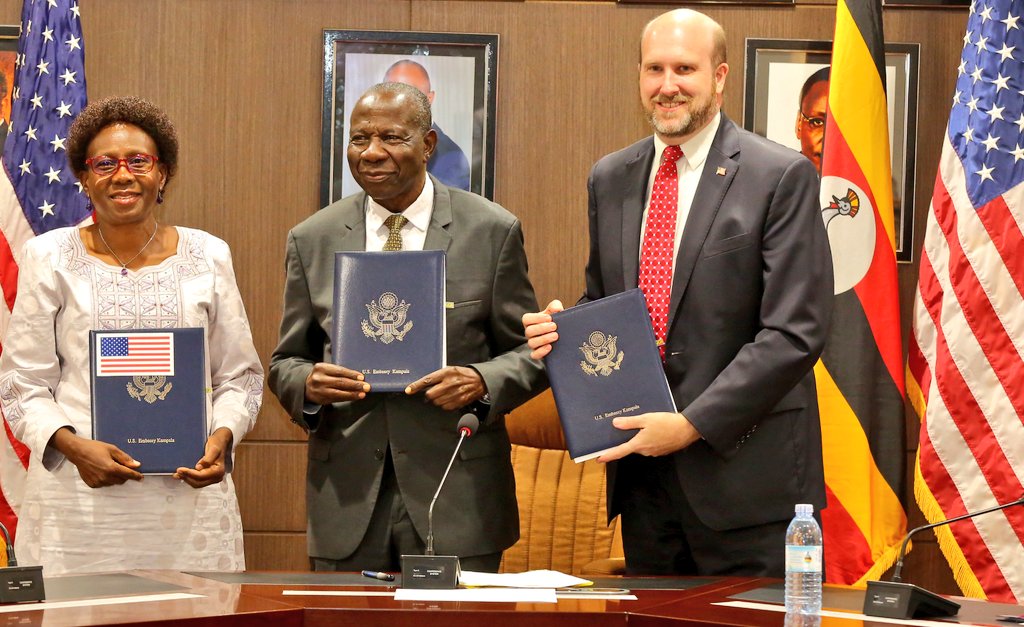
Finance Minister Matia Kasaija signed on behalf of the Government of Uganda, while U.S. Ambassador William W. Popp represented the United States.
Addressing Funding Gaps and Health System Weaknesses
Under the Memorandum of Understanding (MoU), the United States will invest USD 1.7 billion over the next five years to support priority health programmes, ranging from HIV/AIDS, TB, malaria, maternal and child health, and polio eradication to global health security, disease surveillance, and emergency preparedness.
Uganda, on its part, has pledged to increase domestic health spending by USD 500 million, a shift aimed at gradually assuming more financial responsibility in the sector.

The commitment responds to long-standing concerns that Uganda’s health system remains vulnerable due to heavy reliance on external funding.

The two countries also agreed to support faith-based healthcare providers, who serve a significant proportion of rural and hard-to-reach communities but often operate with limited resources.
Focus on Health Security and Self-Reliance
Kasaija said the cooperation goes beyond disease-specific interventions and aims to fix structural weaknesses that have hindered service delivery for decades.
“This collaboration will yield not only disease-specific outcomes but also significant improvements in national systems, institutions, and workforce capacity,” he said.
According to Ambassador Popp, the MoU marks a strategic shift toward building Uganda’s long-term self-reliance and strengthening global health security.
“We are building on prior successes and making a significant shift towards promoting self-reliance through strong community health systems, clear performance metrics, and a foundational commitment to data systems and health security,” he noted.
Boost to Global and National Health Preparedness
The MoU, initiated earlier by PSST Ramathan Ggoobi and Health Ministry Permanent Secretary Dr Diana Atwine, will run from 2026 to 2030. It is expected to enhance Uganda’s capacity to detect and respond to public health threats, an increasingly urgent priority in the wake of recent Ebola outbreaks and global pandemic risks.
Officials say the partnership will strengthen both Uganda’s health outcomes and its contribution to global health security, positioning the country to better prevent and contain outbreaks that could threaten the region and the world.