
Uganda stands at a crossroads, not because of who won the last election, but because of what has followed it. When a nation’s political aftermath is marked by fear, exile, abductions, and silence, the deeper question is no longer electoral arithmetic, it is legitimacy.
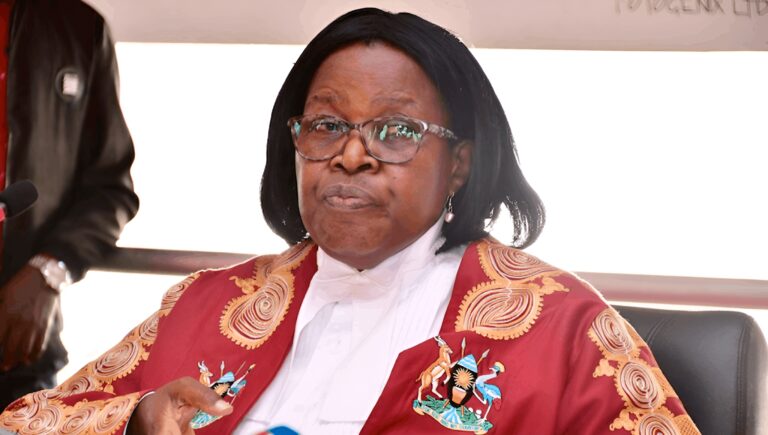
In a powerful message addressed to President Yoweri Kaguta Museveni, former Supreme Court Justice Dr. Esther Kitimbo Kisaakye lays bare a truth many Ugandan’s whisper in private but fear to say aloud: repression is not the language of confidence. If a leader truly wins the consent of the governed, coercion becomes unnecessary. Where repression thrives, legitimacy withers.
The judge’s statement is not the rant of a partisan or the bitterness of a defeated camp. It is a sober indictment delivered by a jurist who once served at the pinnacle of Uganda’s justice system and who now, like many others, lives in involuntary exile for fear of her life.
Among those forced out is the President of the Uganda Law Society, Isaac Ssemakadde. When lawyers, judges, and civic leaders flee their own country, something has gone profoundly wrong.
Uganda’s recent elections were conducted in an atmosphere of darkness, literally and figuratively. A nationwide internet shutdown cut off communication, scrutiny, and transparency. What followed were arrests, intimidation, and a security crackdown that seemed less about maintaining order and more about punishing dissent. If elections are competitive by nature, as they are in every democracy, why should supporting a losing candidate become a crime?
Dr. Kisaakye asks a question that should trouble the conscience of the state: is Uganda different from every other country on earth? Is there anywhere that all citizens vote the same way? Democracies accept disagreement as normal. Autocracies criminalize it.

The tragedy is sharpened by history. President Museveni came to power after a long struggle against dictatorship, promising freedom, rule of law, and constitutionalism.

Under his leadership, Uganda adopted the 1995 Constitution, a document meant to shield citizens from exactly the abuses now alleged: arbitrary arrests, militarized politics, subjugated courts, and the silencing of opponents.
After nearly four decades in power, the President controls the army, the police, the electoral body, and key state institutions. With such authority comes an unavoidable moral burden. Power can stabilize a nation or suffocate it.
The demands set out in the statement are neither radical nor revolutionary. They are constitutional. Restore the rule of law. End abuses by security forces. Allow citizens to exercise their rights without fear. Let courts function independently. Stop labeling political opponents as terrorists. End abductions, sieges, and extrajudicial killings. In short, return Uganda to constitutional governance.
This is not a call for chaos; it is a plea for order grounded in law. It is not an attack on the state; it is a defense of it. Uganda cannot be governed indefinitely through fear. No country can jail, exile, or kill its way to peace.
Perhaps the most poignant line in the message is the simplest: Uganda is our only country. Citizens do not choose where they are born, but they must be allowed to live in their homeland with dignity. Exile should never be a policy tool.
“Uganda deserves dignity. Uganda deserves justice. Uganda deserves peace.” These are not opposition slogans. They are national aspirations.
History will remember what leaders do when confronted with such moments. The question is whether Uganda’s will be remembered as a turning point back to the rule of law or as another missed chance.
For God and for country, the house must be put in order.