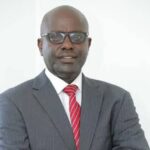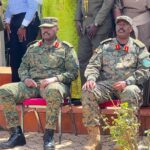
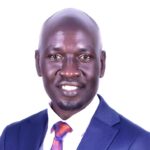
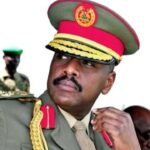




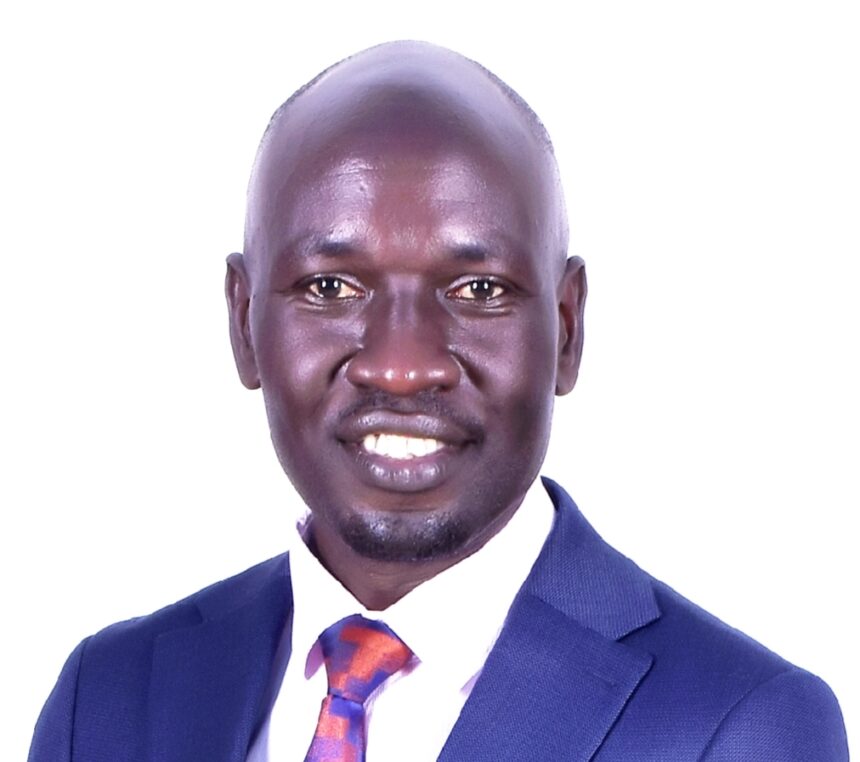

Dear Professor Ogenga Otunnu and General Caleb Akandwanaho (Salim Saleh),
Greetings to you, our senior citizens, in your highly respected capacities.
My name is Dr Joseph Tindyebwa. This morning, I had the privilege of coming across a working paper by Professor Ogenga Otunnu addressing the root causes and consequences of sectarianism, exclusion, marginalisation and conflicts in Uganda.
I am a Senior Lecturer of Public Management at one of Uganda’s prominent universities. I wish to freely share, without fear or favour, my experiential learning and perspectives on Uganda’s political, economic and social realities, informed by scholarly and ideological orientations that are not exclusively derived from institutions of higher learning in the United States and Western Europe.
I wish to raise seven observations and share my commentary on the working paper, which, in my considered opinion, appears disconnected from some of the realities and fundamental questions confronting Uganda today.
1. The need for an open, legitimate and inclusive national evaluation

I propose an open, legitimate and inclusive national evaluation, anchored in the proposed Commission for National Dialogue for Peaceful Political Transition Act.
The objectives of this legislation could provide an appropriate framework for addressing several unresolved national questions through a comprehensive, non-partisan and inclusive national consultation.
Such a process should draw lessons from the Odoki Commission of the late 1980s, which consulted Ugandans about the kind of country and constitutional order they wanted, particularly in relation to constitutionalism and democracy.
Ugandans must be given an opportunity to openly discuss their country’s political future and collectively determine the reforms necessary to secure lasting peace, stability and democratic governance.
2. The tension between political transition, legitimate coalitions and handout politics
The working paper does not adequately address the tensions surrounding political transition, legitimate political coalitions and constitutionally grounded power-sharing arrangements, as opposed to handout politics and compromises involving opposition political party leaders.
In a democracy, political parties should be supported to grow, strengthen their institutions and contribute positively to national development. They should not be weakened or undermined to the point of extinction.
With due respect, Professor and General, I consider the working paper a short-lived intervention that may produce limited results if it does not confront the fundamental political, economic and social challenges facing Uganda.
As citizens and observers, both silently and openly, we continue to experience the pain of unresolved national questions. These include, but are not limited to, the following:
a) Forty years of NRM rule: What has gone right or wrong?
After four decades of National Resistance Movement (NRM) rule, what has gone right or wrong in addressing what President Yoweri Kaguta Museveni Tibuhaburwa described as the African problem?
In his 1986 swearing-in speech and subsequent 1995 Constitution inauguration speech, President Museveni emphasised the need to resolve the African problem of leaders overstaying in power and failing to transfer power democratically and peacefully.
Is the working paper prepared to honestly address this fundamental question without fear or favour?
If we are to discuss Uganda’s political transition meaningfully, we must examine whether the country has made progress in addressing the very governance challenges that informed the NRM’s original political struggle.
b) The manipulation and weakening of the 1995 Constitution
Ugandans are confronted with the challenge of the weakening, manipulation and undermining of the 1995 Constitution.
How can we address the existing constitutional imbalances and inadequacies and reverse unsustainable governance practices that increasingly appear to prioritise individual and family interests, as well as the continued dominance of one political organisation, over the development of strong and sustainable democratic state institutions?
What is the most acceptable approach to resolving this challenge in a manner that reflects the wishes of Ugandans?
I propose the establishment of an independent National Consultative Commission comprising retired judges and justices, credible senior politicians, including former ministers and members of Parliament, presidential advisers, representatives of civil society, cultural leaders and members of the academic fraternity, including professors and other scholars.
These groups could nominate credible representatives to participate in a comprehensive national consultation and dialogue.
I therefore consider the current working paper imbalanced because it does not adequately reflect the aspirations of Ugandans regarding the fundamental restoration of constitutional order, the rule of law, rights and freedoms.
These are inherent rights and principles that should not be subjected to political negotiations or compromises. We must also distinguish between institutional democracy and consociational democracy and establish how the two can contribute to a sustainable democratic order.
c) The need for honest national dialogue and realistic economic reforms
The working paper fails to adequately acknowledge that one of the root causes of Uganda’s challenges is the absence of honest and sincere national discussions about putting the country on a sustainable development path for the next 100 years, free from recurring threats of instability.
The paper should demonstrate how Uganda can be placed above individual interests and political party ambitions. This requires dynamic and realistic policy and constitutional reforms that benefit all Ugandans, particularly the majority who remain socially and economically marginalised and have limited access to state power and national resources.
We must also examine whether the current size and cost of government are justified.
Does having 546 Members of Parliament, 82 ministers and more than 100 presidential advisers adequately address Uganda’s political, economic and social challenges?
Would the country achieve better results by reducing excessive public administration expenditure and redirecting resources towards intentional mass production, industrialisation, investment in natural resources and reliable railway transport to facilitate affordable business operations?
These are the difficult but necessary questions we must address if Uganda is to realise its economic ambitions, including the dream of growing its economy to US$500 billion within 13 years from the current estimated US$73 billion.
Can we subject these questions to a genuine national consultation and agree on realistic political and economic reforms?
Let us stop, stop and stop dishonest politics at the expense of our country.
d) Restoring the independence and effectiveness of state institutions
What has gone wrong with our state and government institutions?
Can we restore the expected glory and independence of the Judiciary? Can we restore the dignity and constitutional authority of Parliament as an institution of democratic representation rather than one that appears to be held hostage?
Where are the safeguards that protect the Bank of Uganda from possible executive manipulation, particularly regarding uncontrolled classified expenditure?
Can the independence and institutional capacity of the Inspectorate of Government (IGG) and the Electoral Commission be strengthened to enable them to execute their constitutional mandates without interference?
How can we establish institutions whose leaders are sufficiently independent to perform their duties without undue influence from the appointing authority or other powerful actors within the Executive?
Uganda needs to tame excessive presidential and executive control, which undermines the effectiveness and efficiency of public institutions.
We must build institutions that are stronger than individuals and capable of serving the country regardless of who occupies political office.
e) Addressing historical political persecution, repression and the administration of justice
The working paper appears to rely excessively on the historical experiences of the colonial era while giving insufficient attention to the foundational political realities Uganda continues to face.
How can we unconditionally end the historical pattern of political persecution and repression inherited from the 1967 constitutional crisis?
Why should politicians face intimidation, alleged kidnappings, unlawful detention and reports of torture in ungazetted detention facilities?
Why should the Executive tolerate a justice system that appears unable to guarantee constitutional rights, including mandatory bail for eligible political detainees?
Why can the working paper not propose immediate and practical solutions to restore sanity and guarantee freedom to those facing politically related charges?
Such discussions should include the cases involving Dr Kizza Besigye, former Kampala Lord Mayor Erias Lukwago, Hajji Obedi Lutale, Sam Mugumya, Sam Makokha and others whose cases have raised concerns about political freedom and the administration of justice.
The number of prominent Ugandans living in political exile has also increased amid concerns about intimidation and threats to their safety. These include Robert Kyagulanyi, Ssemujju Nganda, Salam Musumba and many others who, in one way or another, have found themselves unable to freely participate in the country’s political environment.
Can the working paper address these primary concerns and help restore Uganda as a country where freedom is guaranteed, constitutional rights are respected and political differences are resolved through democratic means?
f) Electoral reforms and the implementation of Supreme Court recommendations
The working paper also lacks an honest examination of Uganda’s electoral processes and the recommendations arising from presidential election petitions before the Supreme Court in 2001, 2006, 2011 and 2016.
The Supreme Court, as the independent custodian of justice, made recommendations aimed at improving the conduct of presidential elections and strengthening the conditions necessary for free and fair elections.
Why have these judicial recommendations not been fully implemented?
Why has Parliament failed to give sufficient attention to substantive electoral reforms recommended by the Supreme Court?
Instead, the country appears to be moving towards another electoral contest without adequately addressing the political and institutional conditions necessary to guarantee a level playing field for all Ugandans.
Our focus should not simply be on endorsing or preparing for another state-favoured presidential candidate. It should be on creating a political environment in which every Ugandan can freely participate in the electoral process without fear, intimidation or institutional disadvantage.
This is a matter of national importance that does not require me to disclose where I studied or to possess academic credentials from a university in the United States or elsewhere to appreciate its significance.
3. A call for sincerity and national responsibility
Professor Ogenga Otunnu and General Salim Saleh, with due respect, I appeal to you to let us be sincere with our country.
Uganda is bleeding, and if we genuinely desire to build a better Pearl of Africa that will outlive us, we must confront the realities facing our nation with honesty, courage and a sense of responsibility.
History will judge us harshly if we fail to use our respective positions and influence to contribute to meaningful national transformation.
When some Ugandans raise these concerns, they are sometimes accused of looking for jobs or political appointments. Indeed, we can work and contribute when opportunities arise, but that should never be a reason to compromise our principles or remain silent about the challenges confronting our country.
Our responsibility to Uganda must be greater than our individual interests.
I therefore urge you to reconsider the proposed working paper and broaden the discussion to include the fundamental constitutional, political, economic and institutional questions raised above.
Uganda needs a genuine national dialogue that does not merely seek political accommodation among powerful individuals and political actors, but one that addresses the legitimate concerns and aspirations of ordinary citizens.
The future of our country must be built on constitutionalism, institutional independence, accountability, respect for human rights, democratic governance and inclusive economic development.
For God and My Country.
Dr Joseph Tindyebwa, PhD
Political and Policy Analyst/Research Consultant
Senior Lecturer of Public Management
Email: [email protected]