
Summary:
The district boasts 1,968 domestic water points, serving 223,150 people, 172,084 of whom live in rural areas. Latrine coverage stands at 86%, but hand washing remains a challenge at just 26%.
KABALE: The Kabale Resident District Commissioner (RDC), Godfrey Nyakahuma, has called for a collective effort to combat waterborne diseases such as cholera, typhoid, dysentery, and diarrhea, noting that many of Uganda’s health challenges stem from preventable illnesses.
Nyakahuma made the remarks during belated World Water Day celebrations held at Nyabitabo Primary School in Kaharo Sub-county on Friday. While the day is officially observed on March 22, Kabale District marked the occasion under the theme: “Water and Environment: Water Resources for Enhanced Resilience and Improved Incomes and Livelihoods.”

Emphasizing the high cost of treating waterborne illnesses, RDC Nyakahuma urged all stakeholders to work together to mitigate the risk.

He commended partners for supporting the district in providing clean and safe water and noted progress in reducing the number of households that share water sources with animals.
Flavia Nyinakiiza Kanagizi, the Kabale District Speaker and Kaharo Sub-county Female Councilor, highlighted water scarcity in areas such as Nyakatare, Katenga, and Burambira, calling for urgent intervention.
Kanagizi also expressed concern over poor hygiene practices, citing data that shows 74% of households do not wash hands after using latrines.
She added that the situation is worse in schools, where handwashing is often neglected, putting students at greater risk.
Representing the Chief Administrative Officer, Emmy Namanya, the Senior Assistant Secretary, emphasized the need for behavior change to improve sanitation and hygiene.
He raised concern over open defecation among the elderly and resistance to adopting hygienic practices.
Namanya also stressed the importance of revitalizing village water user committees, noting that many struggle to raise funds for water infrastructure maintenance.
Spencer Ngabirano, the Senior Assistant Engineering Officer for Water, reported that 90% of Kabale residents now have access to clean water, with 86% of water sources functional, both figures exceeding national averages of 65% and 67%, respectively.
The district boasts 1,968 domestic water points, serving 223,150 people, 172,084 of whom live in rural areas. Latrine coverage stands at 86%, but handwashing remains a challenge at just 26%.
To improve water access in hilly regions, Ngabirano said the district has prioritized the construction of rainwater harvesting tanks.
Two 50,000-liter tanks have been completed in Kateete-Nkora and Rugyeshi villages in Butanda Sub-county during the 2024/2025 fiscal year, with more planned. Rehabilitation of existing water sources is also ongoing to enhance functionality.
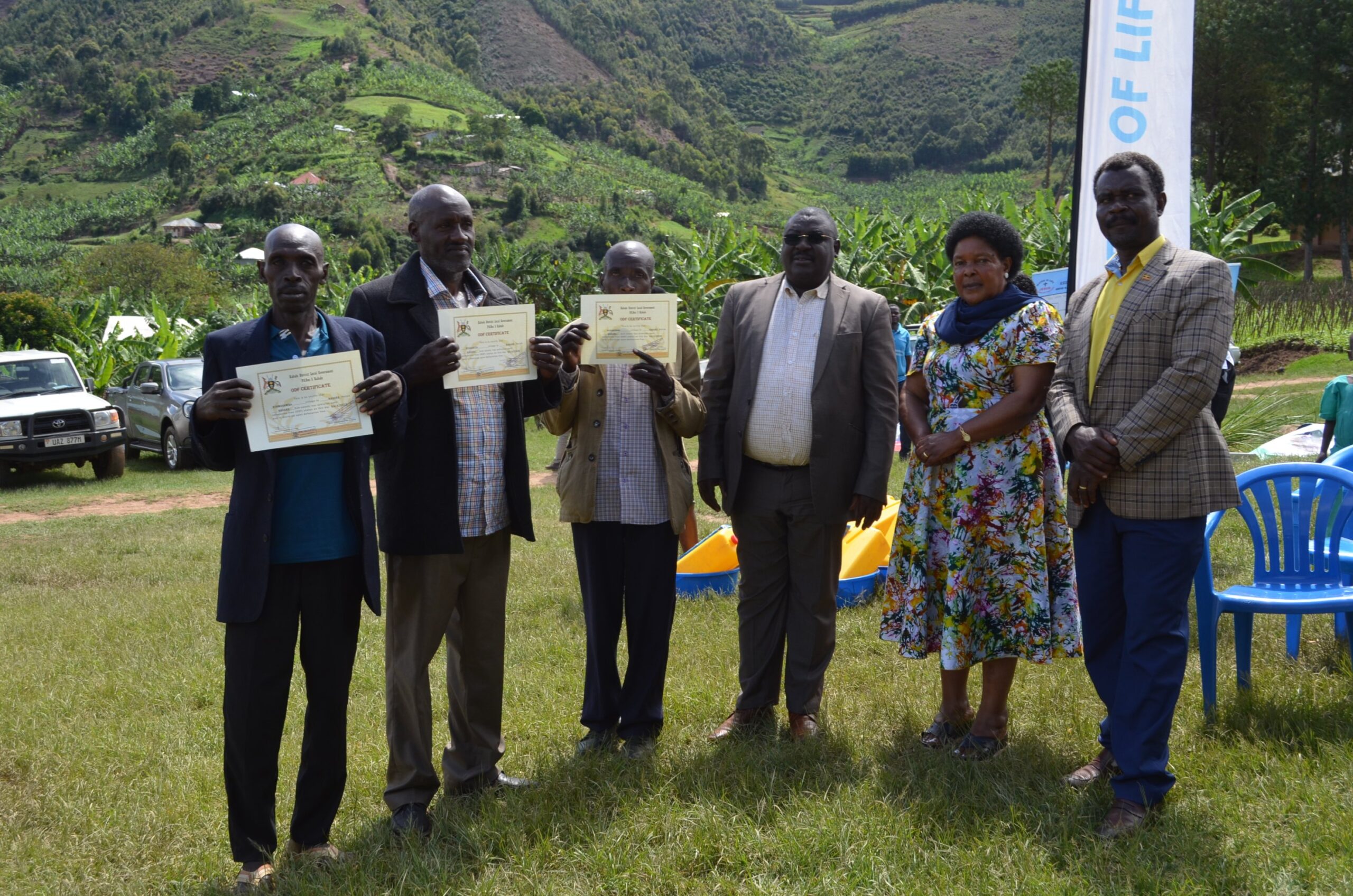
Since 2023, the district has focused on promoting sanitation best practices at the parish and village levels. This year, three villages in Kaharo Sub-county, Nyakahita, Kyamakamba, and Kasharara were declared Open Defecation Free (ODF).