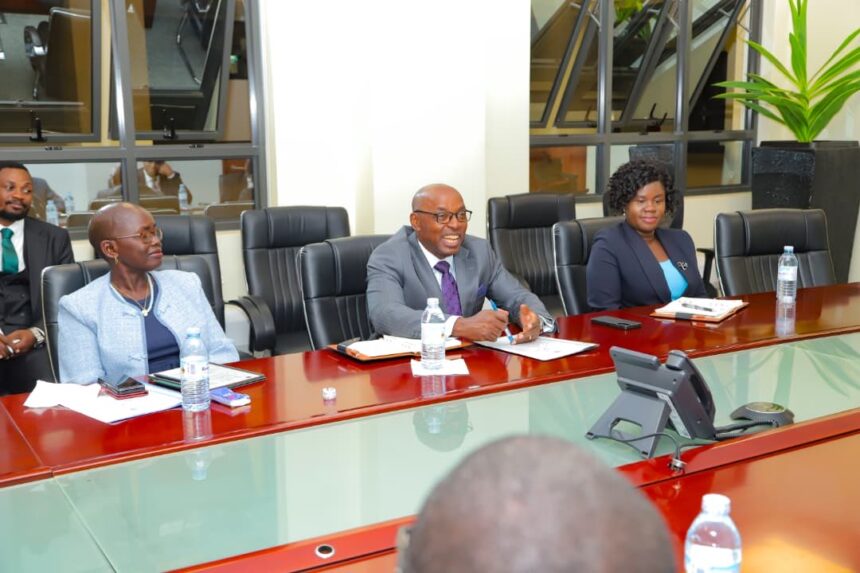

A high-level meeting between the Judiciary and the Attorney General’s Chambers has laid bare deep-rooted structural and operational gaps undermining effective justice delivery in Uganda, with leaders warning that fragmented reforms risk worsening inefficiencies across the sector.
The engagement, led by Chief Justice Flavian Zeija and Attorney General Kiryowa Kiwanuka at the Judiciary Headquarters in Kampala on Tuesday, focused on persistent challenges including poor inter-agency coordination, case delays, prison congestion, and weak enforcement of court decisions.
At the center of the discussions was a growing concern that justice sector reforms are being implemented in isolation, leaving critical institutions under-resourced and overstretched.
Justice Zeija cautioned that strengthening one arm of the system without supporting others creates bottlenecks that ultimately slow down service delivery.
Staffing shortages in key institutions, particularly the Attorney General’s Chambers and the Office of the Director of Public Prosecutions, were highlighted as a major impediment to timely case handling, contributing to prolonged case backlogs and delayed justice.

The meeting also exposed inefficiencies in digital systems, with delays in receiving court documents cited as a major operational setback.

While the rollout of the Electronic Court Case Management Information System (ECCMIS) is intended to streamline processes, lack of full integration across institutions continues to limit its impact.
A joint technical team has now been proposed to review and align existing systems.
Prison congestion emerged as another pressing issue, with delays in committing suspects to trial identified as a key driver of overcrowding.
Leaders acknowledged that without faster case processing and better coordination between prosecutors, courts, and investigators, efforts to decongest prisons will remain ineffective.
Concerns were also raised about inconsistencies in the execution of court decisions, with reports of non-compliance and lower courts failing to align with higher court rulings.
This, officials warned, undermines the rule of law and public confidence in the justice system, prompting calls for stricter administrative enforcement and clearer directives.
Tensions within the legal profession, particularly in the relationship between the Bar and the Bench, were also flagged as an emerging institutional issue requiring clarity and discipline to maintain professional standards.
Both sides agreed that stronger institutional collaboration, harmonized systems, and regular high-level engagements are critical to addressing these systemic weaknesses.
However, the discussions underscored that without coordinated reforms, increased staffing, and accountability mechanisms, Uganda’s justice system risks continued inefficiency and delayed access to justice.