
Summary:
- Prof. Kwesiga questioned the rationale behind importing small items such as toothpicks from countries like China, Indonesia, and Korea when Uganda has abundant bamboo resources.
KABALE: Prof. Charles Kwesiga, Executive Director of the Uganda Industrial Research Institute (UIRI) has expressed concern over Uganda’s continued importation of potato crisps despite the country’s capacity to grow Irish potatoes in several regions.
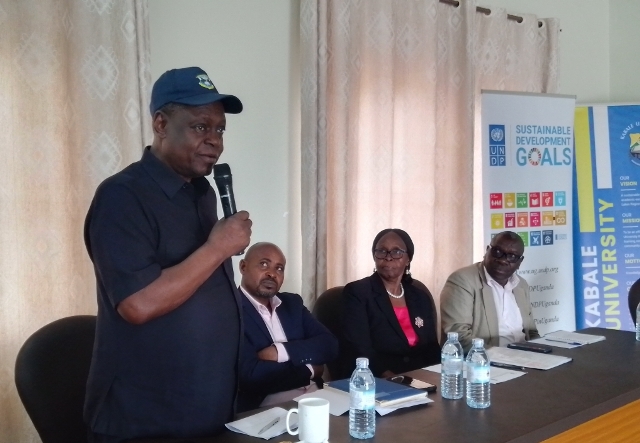
During a Stakeholders Workshop on the Irish Potato Value Chain at Kabale University on Monday, Prof. Kwesiga criticized the presence of foreign-made Irish potato crisps, particularly from the United States, on local supermarket shelves. He found it particularly troubling to see American crisps in Kabale District, an area known for its successful Irish potato cultivation.
Similarly, Prof. Kwesiga questioned the rationale behind importing small items such as toothpicks from countries like China, Indonesia, and Korea when Uganda has abundant bamboo resources.

As the owner of an Irish processing plant, Prof. Kwesiga urged Kabale University to focus on the careful selection of skilled labor, the adoption of appropriate technology, and the provision of affordable financing to ensure high-quality production and sustainability.

CUE IN PROF. CHARLES…ON VALUE ADDITION…ENG//
Kabale University Vice Chancellor Prof. Joy Kwesiga announced a significant boost of over UGX 900 million from the United Nations Development Program (UNDP) for investment in the Irish Potato Value Addition Program. This funding was partially used to acquire new Irish potato processing machines, which were showcased at the event.
CUE IN PROF. JOY KWESIGA…ON UNDP GRANTS…ENG//
Innocent Fred, the UNDP Team Leader for Inclusive Growth and Innovation, highlighted that the partnership with Kabale University aligns with Strategic Development Goal No. 1, which aims to eliminate poverty. He noted that UNDP’s annual investment in Uganda totals UGX 100 billion, with a vision to create job opportunities, particularly for the youth.
CUE IN INNOCENT…ON UNDP…ENG//
Kabale District Production Officer (DPO) Mr. Beda Mwebesa challenged Kabale University to conduct research on the increasing soil infertility that has led to a significant decline in Irish potato yields in the Kigezi sub-region over the past 15 years. Mr. Mwebesa pointed out that, despite the use of fertilizers, the yield has decreased from 9-10 bags of potatoes to just 4-6 bags per 100 kg of seed planted per season.
CUE IN DPO MWEBESA…ON SOIL INFERTILITY…ENG//
Kabale University, which transitioned from a private institution to a public academic entity serving the Kigezi sub-region, has seen significant growth since the change. The university’s student population has expanded from 1,500 to over 5,000 as of June 2024, and it has also benefited from support from various development partners, including UNDP.