






Summary:
- Flavia Kabahenda, the District Woman Representative for Kyegegwa, called for the development of policies to reintegrate teenage mothers back into the school system, noting the rise in teenage pregnancies and child marriages, particularly during the COVID-19 pandemic.
KAMPALA: The Government of Uganda has unveiled plans to invest in initiatives aimed at encouraging men to adopt a positive mindset towards women and abandon harmful masculinities that are jeopardizing the wellbeing of women in the country.
This five-year strategy, running from 2026 to 2030, was revealed by Betty Amongi, the Minister of Gender, during her presentation before Parliament in preparation for the upcoming International Women’s Day celebrations on March 8, 2025, in Kyankwanzi District.
Minister Amongi emphasized key priorities for the Government, which include: “Mindset change through budget allocations for positive mindset campaigns, promoting male-positive masculinities, programs for care work, community mobilization and gender-responsive household approaches, as well as social protection programs for vulnerable groups like children, the elderly, and the sick. The elimination of gender-based violence (GBV) and the promotion of women’s rights through scaling up GBV prevention and response services across all regions and workplaces will also be a focal point. Additional actions will address cyber GBV, innovative strategies to change socio-cultural norms, and promote positive parenting.”

She also urged the Government to explore domestic financing options to reduce reliance on external funding, which is increasingly under threat due to global geopolitical shifts.

“We need the support of Parliament to increase domestic financing for gender equality and the empowerment of women and girls to supplement the external funds, which are currently at risk due to global geopolitics,” Minister Amongi stated.
The Government identified persistent poverty and widespread discrimination as major challenges for women in Uganda.
“Approximately 20.3% of the population lives below the national poverty line, with female-headed households particularly affected by multidimensional poverty. In 2019, about 50% of female-headed households experienced this compared to 39% for male-headed households (UBOS 2022). Discriminatory social norms and practices continue to harm women and girls, contributing to high rates of sexual and gender-based violence, teenage pregnancies, and child marriages,” Minister Amongi remarked.
Melsa Avako, the District Woman Representative for Yumbe, raised concerns about the collateral requirements for women accessing entrepreneurial funds from the Government, especially in rural and Muslim-majority areas where land ownership is limited.
“In our district, many women do not own land, which is a condition for accessing microfinance funds. This is a barrier that prevents rural women from benefiting from such programs,” Avako explained.
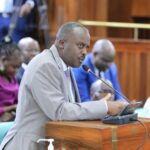
Flavia Kabahenda, the District Woman Representative for Kyegegwa, called for the development of policies to reintegrate teenage mothers back into the school system, noting the rise in teenage pregnancies and child marriages, particularly during the COVID-19 pandemic.
“The number of child parents, even post-COVID-19, is alarming. We need a legislative framework that supports the re-entry of child parents into education. This should apply to both girls and boys who become parents,” Kabahenda stated.
Stella Atyang, the District Woman Representative for Moroto, voiced concerns over the practice of some police officers demanding money from the families of child victims of sexual violence, including rape and defilement.
“Many victims come from impoverished households and cannot afford to pay for police services, such as fuel for investigations. As a result, perpetrators are often not held accountable, and victims are returned to their communities, where they are at risk of further exploitation,” Atyang lamented.