
The Vice Chancellor of Kabale University, Professor Joy Constance Kwesiga, has called on media practitioners in Kabale District to combat the rising tide of fake news by rigorously fact-checking, minimizing bias, and upholding the highest standards of ethical journalism, especially as artificial intelligence (AI) reshapes the media landscape.
“Artificial intelligence is proving to be a powerful ally in journalism,” Prof. Kwesiga stated, acknowledging the dramatic changes brought about by digital media. “We now have the unprecedented ability to communicate instantly across borders, but this progress prompts a vital question: How authentic is the information we share?”
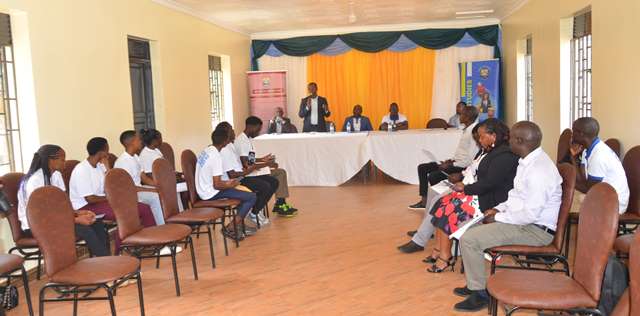
Observed every 3rd May, this year’s World Press Freedom Day celebration, organized by the Department of Communication Studies at Kabale University, was held under the global theme: “Reporting the Brave New World: The Impact of AI on Press Freedom and the Media.” The event brought together journalists, students, lecturers, and media stakeholders to reflect on the implications of AI in journalism, as well as the broader state of press freedom.
The Vice Chancellor who was represented by Dr. David Majariwa, the Director of the Institute of Language Studies at Kabale University during the belated World Press Freedom Day (WPFD) celebrations held at Kabale University grounds on Monday, emphasized the profound responsibility borne by journalists today.
“Our role is not simply to be fast or loud; it’s to be accurate and authentic. In an era where anyone can publish, what sets professional journalists apart is our unwavering commitment to truth.” She remarked.

Prof. Kwesiga also highlighted the delicate balance between journalistic freedom and personal bias.

“What happens when a journalist is also an activist? We must be vigilant to ensure personal perspectives do not compromise our reporting.” She referenced Article 19 of the Universal Declaration of Human Rights, which guarantees freedom of opinion and expression but does not absolve journalists from striving for accuracy.
“This paradox demands reflection,” she said. “While we cherish press freedom, we must hold ourselves to a higher standard of responsibility, especially now when misinformation and disinformation spread rapidly,sometimes by design, sometimes through ignorance.”
Her remarks come at a crucial moment as young journalists enter the field facing global challenges from fake news, which threatens trust in media and democracy itself. “We must do everything possible to limit biases, fact-check rigorously and uphold ethical principles,” she stressed.
AI: A Tool, Not a Threat
Echoing the Vice Chancellor’s optimism, Esther Kukundakwe, Chairperson of the Kabale Media Practitioners Association, highlighted AI’s growing role in journalism, not as a threat, but as a transformative tool with both opportunities and challenges.
She outlined several ways AI is reshaping journalism:
Automated News Writing: AI tools like OpenAI’s ChatGPT can assist in drafting routine news stories, easing the workload on journalists.
Data Analysis for Investigative Journalism: AI helps parse vast datasets, revealing hidden trends and patterns, particularly valuable for investigative work.
Fact-Checking: In the fight against misinformation, AI verifies the authenticity of images and stories swiftly, helping journalists uphold truth.
Personalized Content Delivery: AI enables media outlets to tailor content to audience preferences, enhancing engagement.
Transcription and Translation: Automated transcription and multilingual translation improve efficiency and inclusivity.
However, Kukundakwe cautioned about AI’s challenges, including potential job displacement, inherent biases in AI models, and ethical concerns about misinformation and deep fakes. “AI requires us to adapt, up skill, and maintain ethical vigilance,” she said.
A Call to Adapt and Collaborate
Kabale District Communications Officer Alex Byakatonda shared a hopeful perspective on AI’s future in media. “While navigating AI won’t always be easy, it offers hope and opportunity. History shows technology creates new roles rather than simply replacing workers.”
Byakatonda urged collaboration between government, media owners, and journalists:
- Governments should enact laws safeguarding journalists’ rights and introduce fair minimum wages to address the often meager salaries faced by media professionals.
- Media Owners must invest in quality journalism, ensure fair working conditions, and resist political interference to uphold journalistic integrity.
- Journalists themselves bear the duty to maintain accuracy, integrity, and credibility in their reporting.