
Summary:
- “Government should not be greedy; you are already overtaxing fuel. Why do you turn it into a soft target for tax increment? A minister whose fuel is bought by the taxpayer must not increase taxes on fuel unnecessarily. May be we should stop fueling all government vehicles for the leaders to understand the pain that citizens go through. Despite being fully aware of the adverse effects of escalating oil prices on both production costs and individuals’ disposable income, this Government under President Museveni continues to burden its citizens with exorbitant taxes on fuel,” said Ssemujju.
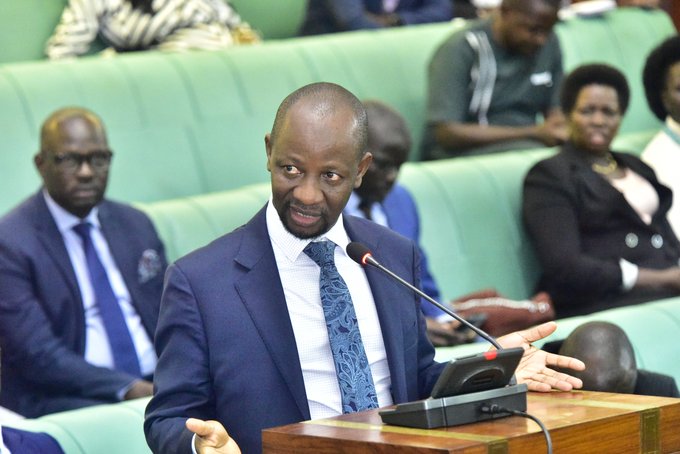
KAMPALA: The Kira Municipality Member of Parliament, Ibrahim Ssemujju has questioned the audacity by government to impose a Shs1550 tax levy on each liter of fuel, yet cars driven by government officials are fueled by taxpayers.
Ssemujju described such a proposal as a greedy move by Government to tax the already heavily taxed taxpayers in Uganda.
“Government should not be greedy; you are already overtaxing fuel. Why do you turn it into a soft target for tax increment? A minister whose fuel is bought by the taxpayer must not increase taxes on fuel unnecessarily. May be we should stop fueling all government vehicles for the leaders to understand the pain that citizens go through. Despite being fully aware of the adverse effects of escalating oil prices on both production costs & individuals’ disposable income, this Government under President Museveni continues to burden its citizens with exorbitant taxes on fuel,” said Ssemujju.

In their Minority reports, the Opposition MPs including; Ssemujju, Muwanga Kivumbi (Butambala County) and Hanifah Nabukeera (Mukono DWR) revealed that Government is currently collecting Shs1450 per litre of petrol, Shs130 per liter of diesel.

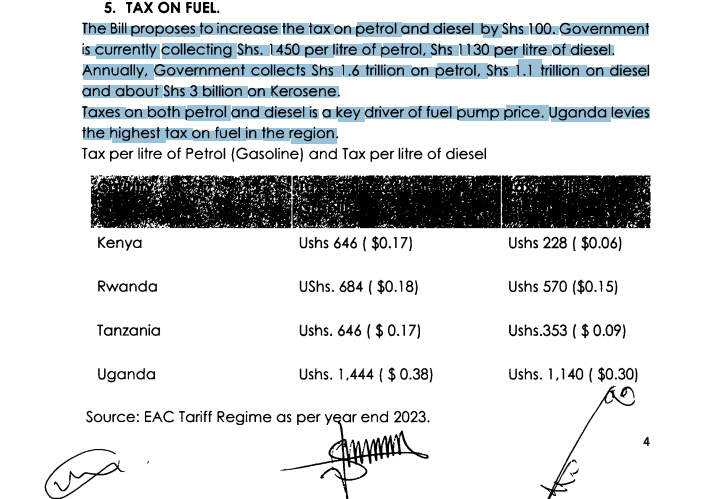
Annually, Government collects Shs1.6Trn on petrol, Shs1.1Trn on diesel and about Shs3Bn on Kerosene and these taxes on both petrol and diesel are the key driver of fuel pump price and that Uganda levies the highest tax on fuel in the region.
“We continue to warn this government that, the consequences are dire: as fuel prices soar, production becomes more costly, hindering economic growth and potentially leading to job losses. Moreover, the average Ugandan faces a significant reduction in disposable income, as higher fuel costs trickle down into increased prices for goods and services across the board. This scenario not only jeopardizes individuals’ financial stability but also undermines consumer confidence and investment, exacerbating economic instability. The more reason why many businesses close every year,” added Ssemujju.
Ssemujju also pleaded with Parliament to reject the proposal by Government to introduce a levy of Shs500 per 50 kg of Lime, adhesive and Grout, saying such a move would likely exacerbate the current 2.5 million housing deficit in the country, which would be contrary to Gov’t policy of providing decent and affordable housing in Uganda.
“Obviously when you increase taxes on building materials, you are increasing the cost of construction. This may discourage investment in this sector or may make renting very expensive. Again we plead with this government not to look one side of revenue enhancement but also look of the plight of its citizens,” said Ssemujju.