
Summary:
- Bwana highlighted that Uganda’s forest cover stood at 71% at independence but has since drastically diminished due to donor-funded initiatives that often neglect local development solutions.
KANUNGU: The Chief Executive Director of UMOJA Conservation Trust, Bryan Tosha Bwana, has called on the leaders of Kanungu District to draft bylaws that protect the rights of artisanal miners and promote sustainable mining practices, with a particular focus on eliminating child labor.
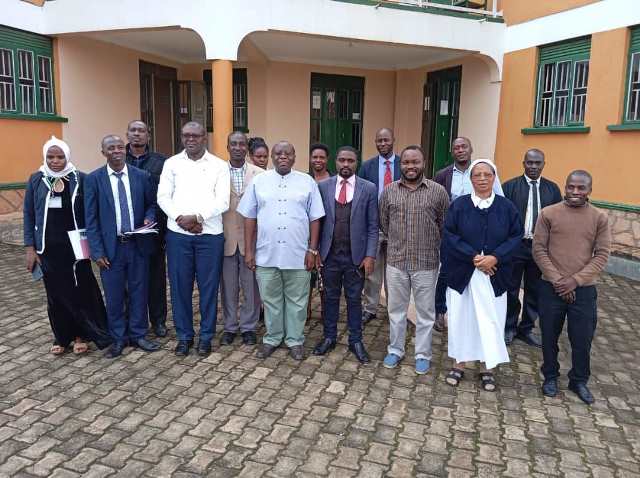
Speaking as that guest Speaker and Consultant on September 10, 2024 during a consultative dialogue with the Executive Director of UMOJA Conservation Trust (UCT), leaders from Kanungu District (KDLG), and its technical team hosted at Great Lakes Regional University (GLRU) in Kanungu District, Bwana highlighted that Uganda’s forest cover stood at 71% at independence but has since drastically diminished due to donor-funded initiatives that often neglect local development solutions.
The event focused on discussing strategies to protect and conserve the environment for future generations.

Bwana cited Semei Kankunguru, who planted Mivule trees across the country without external support, as an example of indigenous conservation efforts we should emulate.

Bwana also discussed how poverty in Kanungu has led to encroachment on wetlands and stressed the need for a structured exit plan that avoids further destruction of natural resources.
He proposed zoning Kanungu to optimize land use, and encouraging bamboo products and bamboo housing as sustainable and affordable alternatives.
He recommended focusing on a few key projects, such as establishing a Mineral Resource Development Center at GLRU in Kanungu, given the district’s rich mineral resources.
He emphasized that creating a Minerology Institute in the district could generate employment, promote research, and foster community understanding of sustainable mineral exploitation and waste management.
Bwana also reminded participants that the President is expected to assent to the Artisanal Mining Bill, which will regulate artisanal mining activities, including in Kanungu.
Dr. Africano Kangire, Vice Chancellor of GLRU and Principal Research Officer, shared that the university received its provisional license from the National Council for Higher Education in December 2015 and was officially opened by President Yoweri Museveni in 2016.
“With a vision of becoming a leading provider of higher education in the Great Lakes region, GLRU has formed strong partnerships, including with UMOJA Conservation Trust, which operates in Tanzania, Uganda, and Zambia”. Dr Kangire stated.
Dr. Kangire also emphasized Kanungu’s strategic location, bordered by the Democratic Republic of Congo, Rukungiri, Kabale, and Kisoro, making it a springboard for regional development and self-sustainability.
He underscored the collaboration between GLRU, UCT, and KDLG in promoting sustainable agricultural and environmental management.
He called for climate-smart agriculture, the use of appropriate fertilizer blends for local crops, small-scale irrigation systems, and agro-insurance to support sustainable farming. Key crops such as bananas, beans, cassava, rice, tea, and coffee offer significant potential for the region, he said.
Turyatemba Christopher, Deputy Vice Chancellor of GLRU, expressed appreciation for the district’s participation and reiterated the university’s commitment to partnering with KDLG and UCT to promote sustainable resource governance.
He identified critical areas for collaboration, including agricultural research, drafting bylaws and ordinances on natural resource management, training district staff and political leaders, and advising on district development policies.
Christopher also expressed concern that GLRU had not been consistently invited to key district functions, such as budget conferences and standing committee meetings.
He announced that the university plans to conduct a study on restoring and protecting the riverbanks of Ishasha, Munyaga, and Mitano and hopes to collaborate with the district on this initiative, resources permitting.
Ngabirano Richard, Academic Registrar of GLRU, gave a brief history of the university, which started as Kinkiizi Community College in 2002 and gained university status in 2015.
GLRU now offers programs in Education, Business, Agriculture, and Social Sciences, with a renewed focus on revising its curriculum to include Tourism, Agriculture, Health, Vocational and Engineering Studies, ICT, and Environment and Natural Resource Management.
Rukundo Joshua, District Councilor for Nyanga and Chairperson of the Natural Resources, Production, Trade, and Commercial Committee, delivered an apology on behalf of the District Speaker, Byaruhanga Frank Farah, who was unable to attend.
Rukundo stressed the importance of strategic partnerships for local economic development, urging more attention to environmental protection, resource governance, and community development.
He highlighted forestry, wetland conservation, food security, tea production, mineral extraction, and tourism as key areas for growth.
Agaba George, Acting District Natural Resources Officer, thanked GLRU for organizing the event and called for joint efforts to protect Kanungu’s natural resources.
He identified key assets such as minerals, Bwindi and Queen Elizabeth National Parks, Lake Edward, and the Ishasha and Mitano rivers, emphasizing the need for cautious management.
He also raised concerns about illegal mining activities in the district, particularly in Kayonza and Nyamirama sub-counties, which have drawn the attention of the district council.
He called for the Ministry of Energy and Mineral Development to amend the mineral extraction licensing procedures, questioning why local governments are often excluded from licensing decisions despite being the resource owners.