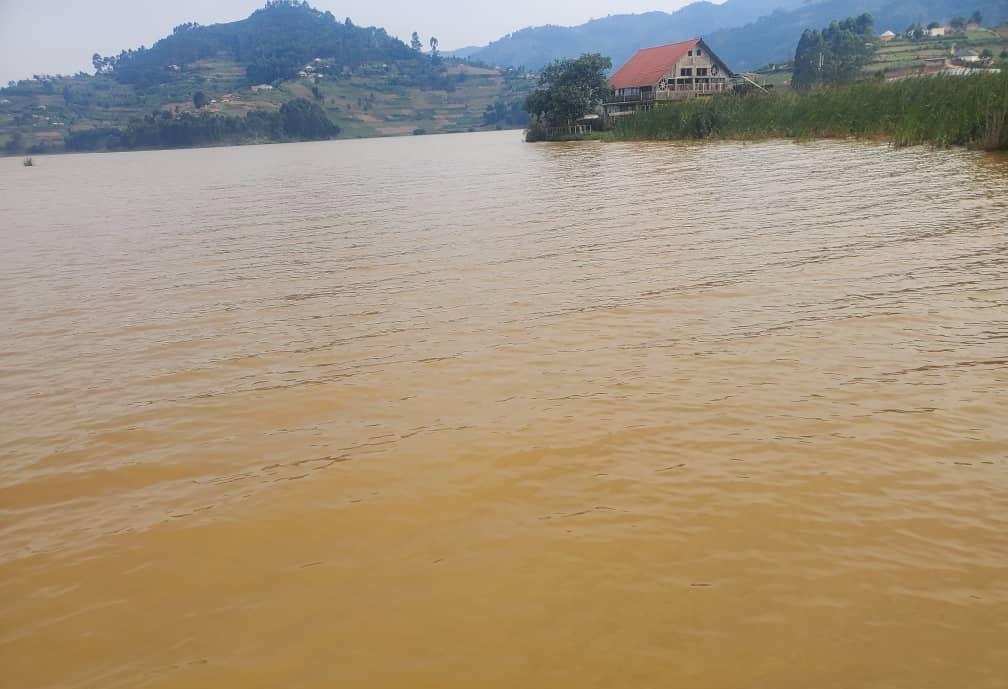

The Ministry of Water and Environment has issued a comprehensive statement on the recent changes observed in Lake Bunyonyi, located in southwestern Uganda between the Districts of Kisoro and Rubanda in the Ruhezamyenda Catchment.
The lake, which has an average depth of 39 meters and a reported maximum depth of 900 meters, is famed for its 29 islands and terraced hills, making it a unique ecological and tourism destination.
However, growing environmental pressures resulting in siltation and pollution, coupled with the impacts of climate change, have threatened its fragile ecosystem. Over the last few days, the waters of Lake Bunyonyi have suddenly turned brownish and begun emitting a strong foul odour, with an oily film and white cream floating on the surface.
These unusual changes prompted the Ministry, working with its Agencies, to undertake a rapid assessment involving field observations, key informant interviews, and water quality sampling and analysis to establish the causes and recommend corrective actions.
According to local communities, the lake has previously changed colour during rainy periods, but the situation would normalize within four days.

This time, however, heavy rains have led to a persistent brown coloration lasting over three weeks, affecting water treatment for households in Kabale town and surrounding trading centres.

The National Water and Sewerage Corporation (NWSC) reported difficulties meeting aesthetic standards for treated water, prompting some consumers to seek alternative sources.
Investigations further revealed human activities as a significant contributor to the problem. With 46 hotels operating along the lakeshores, alongside Harutindo Landing Centre market and inadequate waste management, there are possibilities of wastewater and sewage finding their way into the lake.
In addition, agricultural runoff, quarrying, and iron ore mining in the catchment area have exacerbated siltation.
Water quality analysis confirmed the severity of the situation. Dissolved Oxygen (DO) levels averaged 1.60 mg/L, alarmingly low and indicative of eutrophication, posing a risk to fish survival. Turbidity and colour levels exceeded normal values, with reduced light penetration threatening the aquatic food web.
While pH, temperature, and Total Dissolved Solids remained within acceptable ranges, the brown colour persisted at levels as high as 130 Pt-Co, making treatment difficult.
The Ministry identified several causes, including natural lake turnover triggered by heavy rains, poor waste management, and sediment mixing from degraded shorelines. Despite earlier speculation, there was no evidence of volcanic activity.
To address the crisis, the Ministry of Water and Environment, together with NEMA, NWSC, local governments, and other stakeholders, has outlined urgent interventions.
Short-term measures (within one year):
- Enforcement of environmental and water resources regulations, including inspections and penalties for non-compliance.
- Public awareness campaigns to sensitize communities on the link between human activity and lake health.
- Upgrades in NWSC water treatment technology to cope with turbidity and colour challenges.
Medium to long-term measures (1–5 years):
- Mandatory protection of the lake’s catchment through sustainable farming practices, soil and water conservation, terracing, and tree planting.
- Establishment of proper sanitation and waste management infrastructure at markets and community gathering points.
- Provision of alternative income-generating activities to reduce pressure on natural resources.
The Ministry emphasized that by scaling up catchment management measures and enforcing environmental regulations, the ecological balance of Lake Bunyonyi will be restored, securing its sustainability for both aquatic life and surrounding communities.