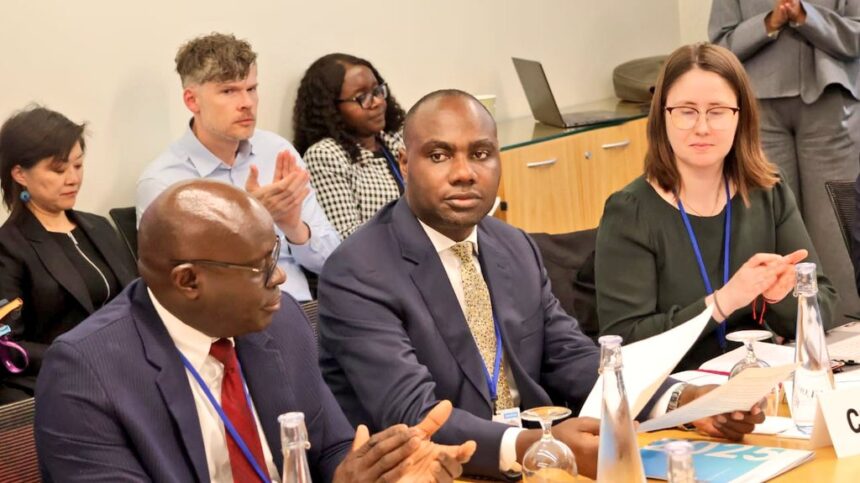

Minister of State for Finance in charge of General Duties, Henry Musasizi, has urged countries to integrate climate-informed debt sustainability into frameworks that determine access to finance and its cost.
He made the remarks in Washington, D.C., during a meeting organised by Uganda, co-chair of the Coalition of Finance Ministers for Climate Action, under the theme: “Building adaptation and resilience to climate change in sovereign debt profiles.”
Minister Musasizi noted the growing global recognition that economic growth must be resilient to climate shocks, adding that Uganda is already integrating the costs and benefits of climate adaptation directly into its sovereign debt analysis.
“As co-chair of the Coalition of Finance Ministers for Climate Action, Uganda is committed to supporting other countries to do the same. The Coalition provides a unique platform for finance ministries facing similar pressures to share tools, experiences and practical solutions. It is a space for real peer learning and collective progress,” he said.
He further explained that when governments borrow to finance adaptation measures—such as drought-resistant agriculture or flood protection—fiscal space may appear to shrink, and credit ratings can worsen.

Meanwhile, Dr. Sam Mugume of the Ministry of Finance, Planning and Economic Development said Uganda needs to mobilise significantly more funding to meet its climate adaptation needs, estimated at USD 12.3 billion in external financing over the next five years.

He noted that concessional financing and official development assistance are declining, while commercial borrowing remains costly, further constraining access to affordable financing for adaptation and resilience.
“Debt sustainability analysis and sovereign credit ratings are increasingly factoring in the negative impacts of climate risk, recognising how droughts, floods and other climate shocks weaken economic growth, reduce exports and revenues, and ultimately undermine debt sustainability,” Dr. Mugume said.