
Parliament has directed the Ministry of Agriculture, Animal Industry, and Fisheries (MAAIF) to renegotiate a $204.8 million (UGX 717.2 billion) loan meant to boost cattle production, citing excessive spending on non-core components.
The facility, supported by a $99.56 million contribution from the International Fund for Agricultural Development (IFAD) under the Resilient Livestock Value Chain (RELIV) Project, drew sharp criticism during a heated plenary session.
Presenting a report, John Bosco Ikojo, Chairperson of Parliament’s National Economy Committee, revealed that UGX 15.6 billion was allocated for consultancies, UGX 14.4 billion for training and workshops, and UGX 9.8 billion for vehicles.
MPs described these consumptive expenditures as disproportionate to allocations for core project activities. Plans to buy 15 vehicles at $186,400 (UGX 671 million) each were singled out as wasteful.
“The project’s cost breakdown lacks detail, making oversight difficult,” Ikojo noted, recommending that funds be redirected to essential inputs, equipment, and services. He also faulted MAAIF for failing to provide a detailed cost analysis despite repeated requests.

The Committee further decried the rushed review process, saying Parliament was given just four days to scrutinize the loan before the government’s September 12, 2025 deadline to sign the agreement. This, Ikojo argued, violated parliamentary rules requiring 45 days for such reviews.

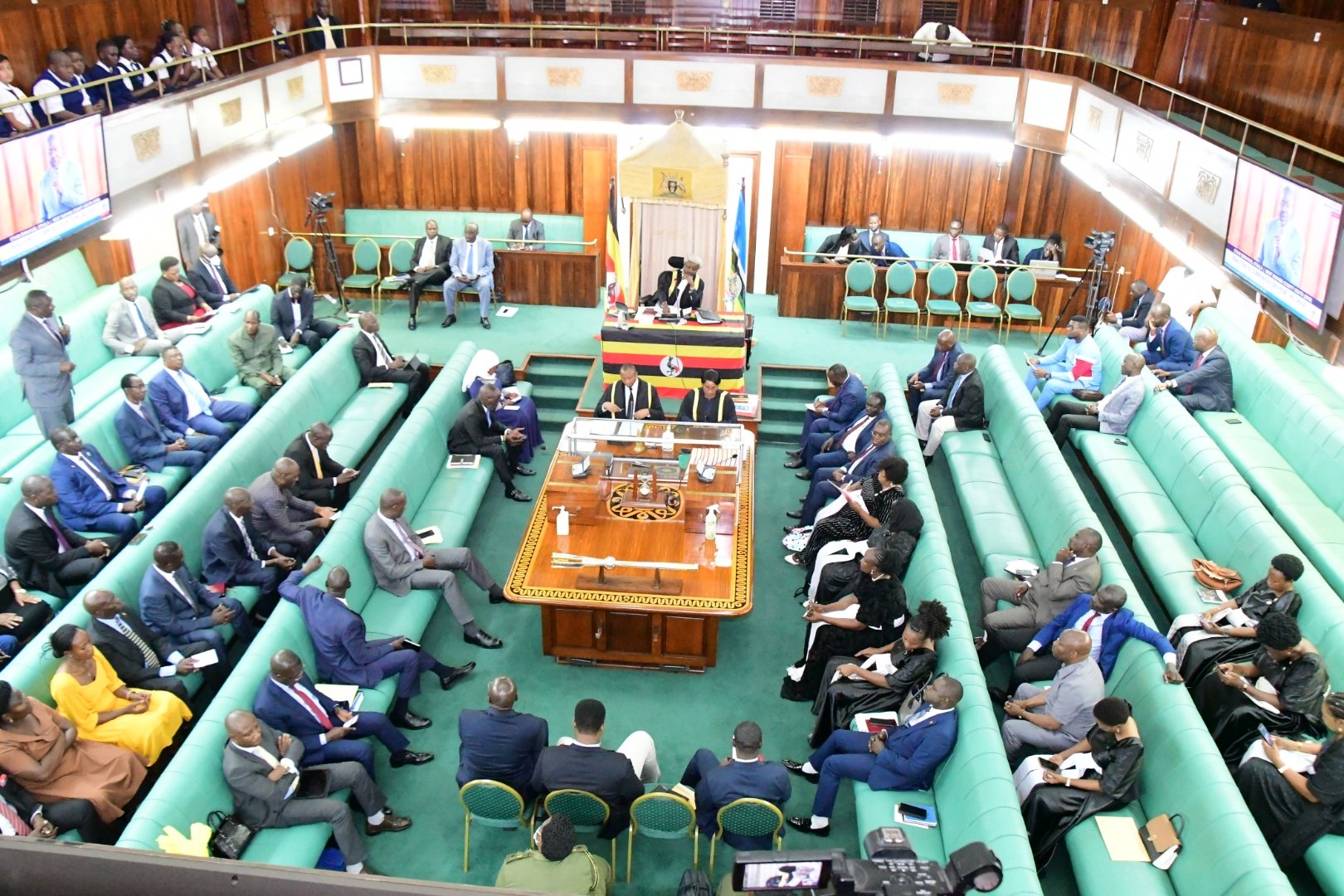
Despite these concerns, Parliament approved the loan, drawing protests from Opposition MPs. Ibrahim Ssemujju (Kira Municipality) slammed the Committee’s recommendation as contradictory: “You highlight flaws but still approve the loan. This is the same mistake we’ve made before, only for the President to later halt such projects, embarrassing Parliament.”
Butambala County MP Muwanga Kivumbi also objected to the allocation of $8 million (UGX 28 billion) for loan management, warning that the design favored elites over farmers. “Consultancies and management swallow the money, while the real beneficiaries, the farmers, are left behind,” he said.
Defending the loan, State Minister for Finance Henry Musasizi stressed its favorable terms, zero interest, a 50-year repayment period, and a 10-year grace period.
“This is one of Uganda’s best concessional loans. Missing the deadline would cost us not just this facility but future IFAD support,” he argued.
The RELIV Project seeks to transform the livelihoods, nutrition, and resilience of 400,000 smallholder’s dairy and beef farming households (around 2 million people) across 55 districts in the cattle corridor. Women are expected to make up 40% of the beneficiaries, while 25% will be youth.
The livestock sector currently contributes 21% of agricultural value and 4.3% of GDP, with 1.4 million households relying on cattle. Yet Uganda’s per capita beef and milk consumption, 6 kg and 36 liters respectively, remains low, even as demand is projected to surge by 320% for beef and 200% for milk by 2050.
While the project promises to strengthen veterinary services, artificial insemination, feed production, and climate resilience, doubts persist over whether its resources will reach the farmers most in need.