
Summary:
Albinism is a rare, non-contagious, genetically inherited condition that occurs globally, regardless of ethnicity. Both parents must carry the gene for a child to be born with albinism.
NEWS: Albinos in the Kigezi sub-region are living in fear due to an alleged demand for their body organs in neighboring Rwanda, the Democratic Republic of Congo (DRC) and Tanzania for ritual sacrifices.
Many have resorted to staying indoors, while others have dropped out of school, fearing abduction by suspected traffickers.

Jonathan Tugumizemu, a resident of Bufundi Sub County in Rubanda District, describes the challenges of raising a child with albinism. He recalls a child from his village that was taken under the pretext of sponsorship four years ago and has never been seen again.

Tugumizemu constantly monitors his 10-year-old son for safety, having overheard people discussing how his child could bring them wealth. Such conversations, he says, leave him anxious and deeply troubled.
Alex Baguma, a student with albinism, reveals that he is frequently taunted by classmates who claim his body parts are valuable on the black market. Another minor, whose mother Sylivia Tugume has three other children with albinism, has been warned against walking alone.
Tugume explains that she has kept all her children at home after learning that some individuals were planning to kidnap and traffic them to Rwanda.
She adds that in her community, the birth of an albino child is considered taboo, and some residents advised her to hide them. However, a local non-governmental organization, Site for Community Services Program (SCOSP), intervened and enrolled her children in school.
Sylvia Kemigisha, the mother of a three-year-old albino child, recounts how her boyfriend abandoned her after their child was born. A year later, he returned, pretending to take responsibility but with intentions of selling the child.
Michael Sabiti, the director of SCOSP, reveals that two albino children under their care were rescued from traffickers attempting to take them to Rwanda earlier this year. He notes that many parents of albino children keep them indoors out of fear.
To address this issue, SCOSP has launched sensitization campaigns targeting parents and security agencies to combat stigma and enhance protection for albino children.
Sabiti emphasizes the need for continuous public awareness to debunk myths surrounding albinism. He urges deliberate efforts to support persons with albinism so they can achieve their full potential.
Sanyu Magara, a resident of Kitumba Sub County, shares that she has been advised by locals to keep her albino children at home, as some believe their birth is a curse.
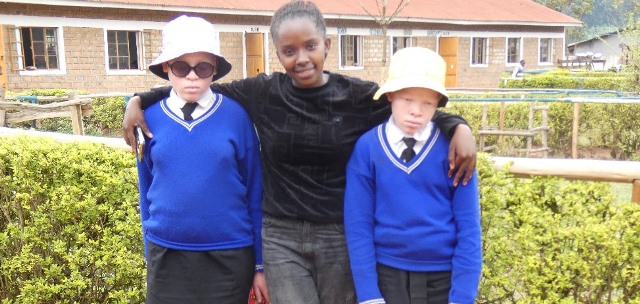
Guidance Aheisibwe, a student at St. Barnabas Secondary School – Karujanga, describes the challenges faced by people with albinism, particularly bullying. However, she appreciates the school’s efforts to create a supportive environment.
Similarly, Joanita Kirabo, another student at St. Barnabas, credits SCOSP for boosting their confidence and self-esteem through support programs.
Albinism is a rare, non-contagious, genetically inherited condition that occurs globally, regardless of ethnicity. Both parents must carry the gene for a child to be born with albinism.
The condition results in a lack of pigmentation in the hair, skin, and eyes, making individuals highly sensitive to sun exposure and bright light.
Despite medical explanations, superstitions continue to fuel discrimination and violence against persons with albinism in some communities.